
























When most people think of “sugar,” they picture that spoonful of white crystals that sweetens their coffee, tea, or baked goods. Those white crystals are extracted from sugar cane or sugar beets, but sugars can also be extracted from other vegetables, fruits, and grains and are found in honey and sap (which can be cooked down into syrups like maple and agave). Food manufacturers now add these extracted sugars to…well…just about everything.
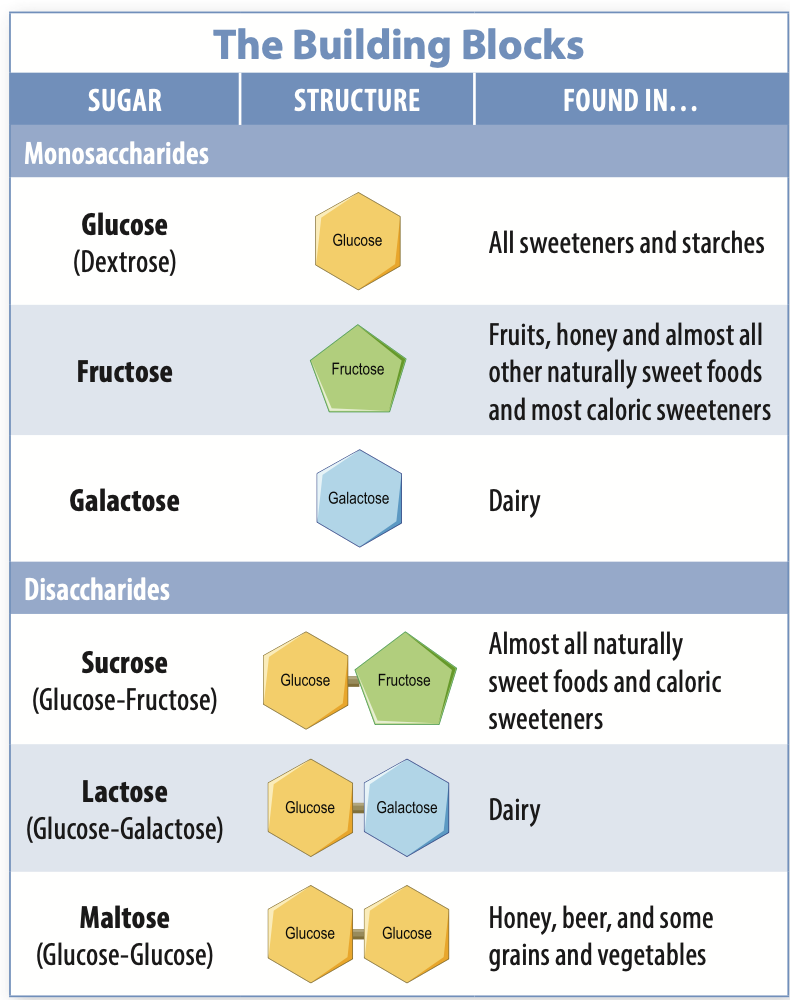
What are Sugars? A “sugar” is a carbohydrate molecule our tastebuds register as sweet. There are three single molecules called monosaccharides (glucose, fructose, and galactose) and three double molecules called disaccharides (two monosaccharides attached together). See “The Building Blocks” for more information.
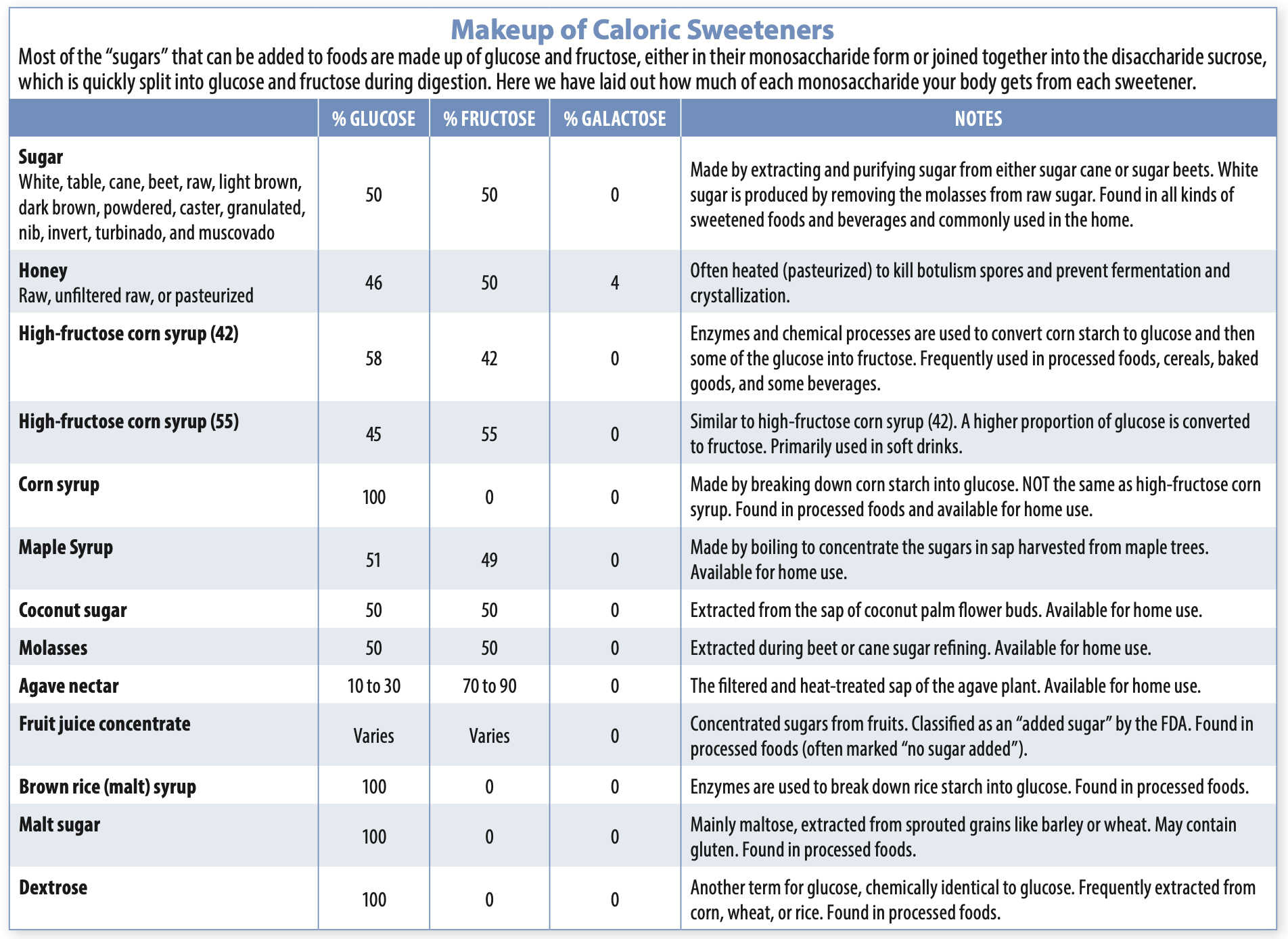
Between them, these mono- and disaccharides make up all the sugars in nature as well as all the sugars added to foods and beverages. The vast majority of added sugars are about 50 percent glucose and 50 percent fructose, either in monosaccharide form or bound together into the disaccharide sucrose. See “Makeup of Caloric Sweeteners” to see how chemically similar most sweeteners are.
Sugar in Your Body. We cannot live without sugars. The monosaccharide glucose is crucial for brain function. It provides fuel for all cells and is the only fuel for some. All carbohydrates we eat, including starches, are broken down to monosaccharides in our intestines. After they are absorbed, they are used for energy production or stored in the liver and muscle for later use.
When these sugars are in their “natural packaging” (whole fruits and vegetables and unsweetened dairy products), they are healthy choices. They come with lots of other nutrients, like vitamins, minerals, and, in the case of fruits and vegetables, phytochemicals and fiber.
But too much added sugar (caloric sweeteners added to processed foods or in the kitchen) is not good for health. Here are some reasons why:
• Sugar in foods without fiber can enter the bloodstream quickly, leading to spikes in blood sugar levels. Repeated spikes are associated with higher risk developing insulin resistance that leads to type 2 diabetes, as well as cardiovascular disease and dementia.
• Foods and beverages with added sugars are often low in essential nutrients (like vitamins, minerals, and fiber), so consuming high amounts provides calories without nourishment (empty calories). Excess calorie intake is associated with higher risk for weight gain. We feel less satiated when we drink sugar-sweetened beverages than when we eat, so we risk ending up consuming more total calories.
• Food and beverages high in added sugars frequently displace nutrient-rich foods in the diet, particularly fiber-rich foods, which may lead to constipation.
• Bacteria on the teeth turn sugars into acids, which leads to tooth decay.
Since all caloric sweeteners are made up of the same mono- and disaccharides, they all look the same once they enter the body—even honey and other so-called “natural” sweeteners—and they will all have the same negative health effects.
“Natural” Sugars. Honey, maple syrup, and agave nectar have a “health halo.” People think they are better for health because they are less processed than other caloric sweeteners and because they have trace amounts of some essential nutrients.
While these “natural sweeteners” are, indeed, less processed, they behave similarly to regular tale sugar in the body. As you can see in “Makeup of Added Sugars,” honey and maple syrup have about the same basic glucose-to-fructose ratio as table sugar (and high-fructose corn syrups). As for the nutrients in these natural sugars, there are too few to make any appreciable difference in your nutrient intake.
Some people consider brown sugar a healthier choice than white. While less of the molasses is removed in processing (or some is added back), brown sugar is essentially the same as white sugar in other respects.
Fruit juices are another natural source of sugar that is raising red flags. Although they are natural and contain some vitamins and minerals, they have high levels of sugars and most or all fiber has been removed. Research suggests fruit juices and fruit juice concentrates should count as added sugars. They also fail to fill us up the way whole fruit does, which risks increasing calorie intake.
What to Do. As far as the body is concerned, added sugar is added sugar. It’s not so much about switching sweeteners as it is limiting them. The American Heart Association recommends women and children limit added sugar intake to 25 grams (about six teaspoons) and men to 36 grams (about nine teaspoons) a day. For reference, there are about nine teaspoons of added sugars in one 12-ounce can of soda.
➧ Know that Sugar is Sugar. It doesn’t matter to your body where a sugar molecule comes from.
➧ Cut Back. Sweet treats should be enjoyed occasionally and in small amounts, rather than expected as an every-day part of your dietary intake.
➧ Choose Fruit. Sweet fruits can scratch that sugar itch between those occasional sugar-sweetened treats. Sugars in whole fruits are not associated with higher health risks.
➧ Limit “Natural” Sweeteners, Too. Honey, maple syrup, and agave nectar are also classified as added sugar. They may be less processed and have trace amounts of nutrients, but their sugar molecules affect the body in the same way as any other sweetener.
Weaning off sweet treats can be difficult. Try eating and drinking sweets less often and/or reducing portion sizes. Set small, progressive goals for cutting back, and take it one step at a time.