






















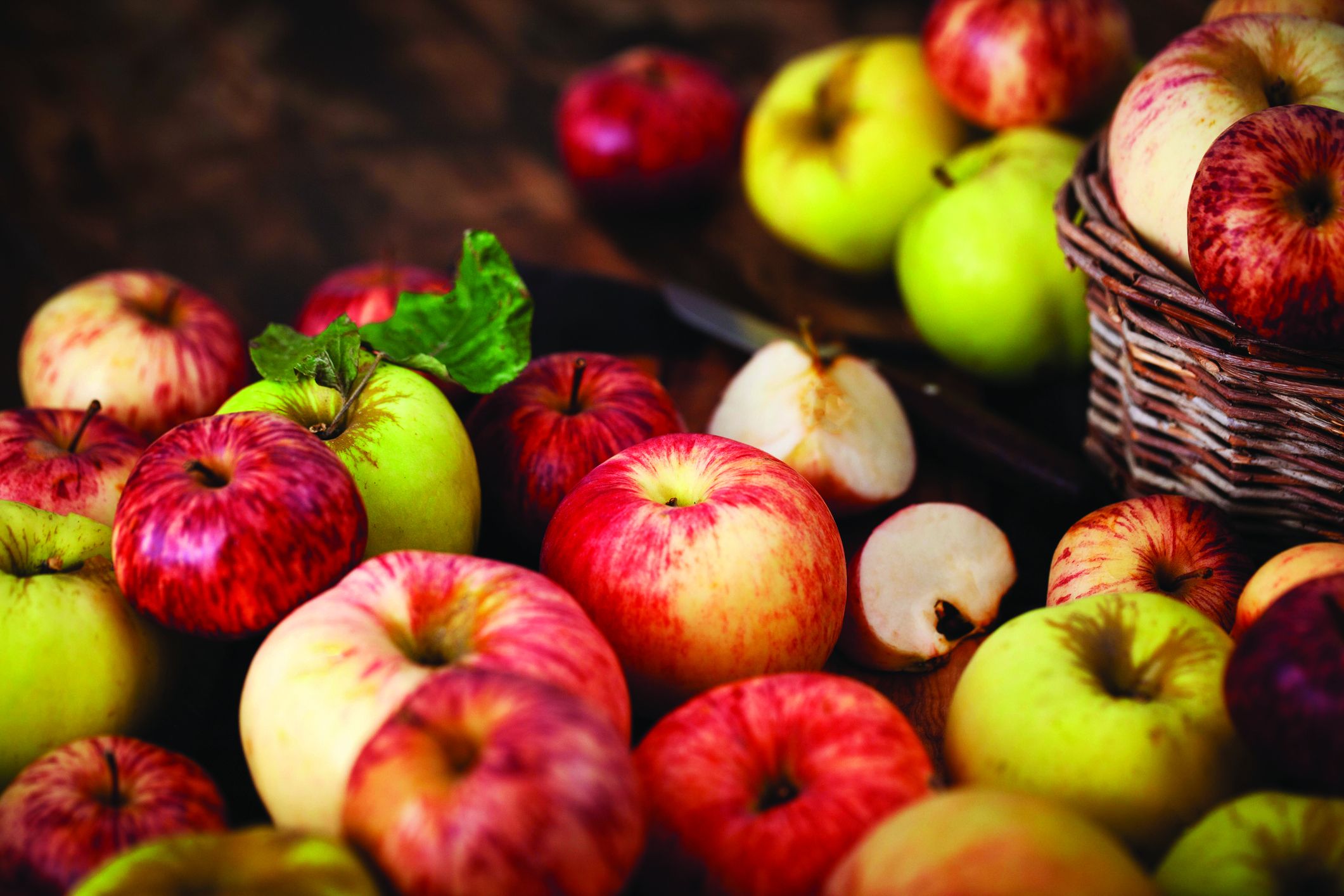
“An apple a day keeps the doctor away” may be one of the oldest nutrition sayings around. While eating apples doesn’t guarantee good health, they are definitely a smart choice. Apples also are inexpensive, widely available year-round, available in a variety of flavors and textures, easy to grab-and-go, and make a good snack choice.
Apple Facts. Americans eat around 14 pounds of apples per person each year, making them the nation’s favorite fruit. With more than 7,500 varieties grown worldwide, there is sure to be an apple suited to every taste and recipe.
A medium apple provides about 100 calories. Apples are roughly 85 percent water and one apple provides about 20 percent of the daily value of dietary fiber. They have more soluble fiber than most other fruits. And, while citrus fruits get all the attention when it comes to vitamin C sources, apples are a good source of this nutrient as well.
Apples should be heavy and firm with smooth skin and a mild, fruity fragrance. Store in a plastic bag in the refrigerator. Rubbing apples under running water is sufficient to remove pesticides, dirt, and contaminants that may be on the surface.
What the Research Shows. While there are not enough data to draw definitive conclusions, analysis of human intervention studies suggests eating apples regularly may help with blood sugar control and the body’s ability to prevent oxidative damage, support healthy veins and arteries, and improve the composition of the gut microbiota (although this is likely true of any fruit). Soluble fiber found in foods such as apples is good for regularity and acts as a prebiotic, feeding your gut microbes and nurturing a healthy gut microbiota. Note that foods made from apples (like applesauce and pies) often have added sugars and other ingredients that may negate the nutritional benefits of the fruit. Apple juice is a concentrated source of sugars and contains no fiber and is not a nutritious choice.
Eating Apples. Apples are convenient and remarkably versatile:
• Grab an apple to eat anywhere, anytime.
• Add chopped apples and cinnamon to oatmeal for sweetness without sweeteners.
• Slice apples into salads for sweetness and crunch.
• Bake cored apples until soft for an easy dessert.
• Pair apple slices with peanut butter or a handful of nuts for a healthy snack.
• Roast apple wedges alongside pork, chicken, or winter vegetables for a naturally sweet side dish.
Many Varieties, Many Uses. Apples are an excellent choice raw or cooked. Some hold their shape better than others when cooked, while others get mushy (see “Many Varieties, Many Uses”). In cooking, consider combining sweet and tart varieties to vary flavor.
Don’t Stop at Apples. Despite their many benefits, apples shouldn’t be your only fruit. All fruits provide a
➧ Think Beyond Snacking. Add apples to oatmeal, salads, baked goods, or roasted vegetable dishes to boost fiber and add sweetness naturally.
➧ Try a New Variety. From tart Granny Smith to sweet Fuji, experimenting with different apples can make incorporating fruit into your dietary pattern more interesting.
➧ Eat More Fruit Overall. Apples are an excellent and convenient choice, but aim for a variety of fruits to get a wider range of nutrients.
Only about 10 percent of U.S. adults meet recommendations for daily fruit intake. Adding an apple to your day is an excellent step toward eating more fruit—but the greatest health benefits come from enjoying a wide variety of fruits as part of an overall healthy dietary pattern.