



















Nearly half of all adults in the U.S have high blood pressure. “High blood pressure (also called hypertension) puts you at risk of many life-threatening problems,” says Rachel Goodman, MD, Chief Cardiology Fellow at Tufts Medical Center. According to the Centers for Disease Control and Prevention, hypertension contributed to over 664,000 deaths in the United States In 2023.
The Pressure Is On. When your heart contracts, it pushes blood out of its chambers into the blood vessels. This puts pressure on the vessel walls, stretching them. When the heart relaxes, this pressure is released. “Hypertension occurs when there is increased force and pressure in your blood vessels,” says Goodman. This is usually caused by a stiffening of the vessels, making it less likely they can expand in response to the increased blood flow. The two numbers in a blood pressure reading represent the amount of pressure on the blood vessel walls during heart contraction (the top number, or systolic pressure) and during relaxation (the bottom number, or diastolic pressure).
Measure Up. “Having your blood pressure measured regularly allows your healthcare provider to diagnose hypertension so it can be treated,” says Goodman, “thereby decreasing your risk of developing conditions like stroke, heart attack, heart failure, and kidney disease.”
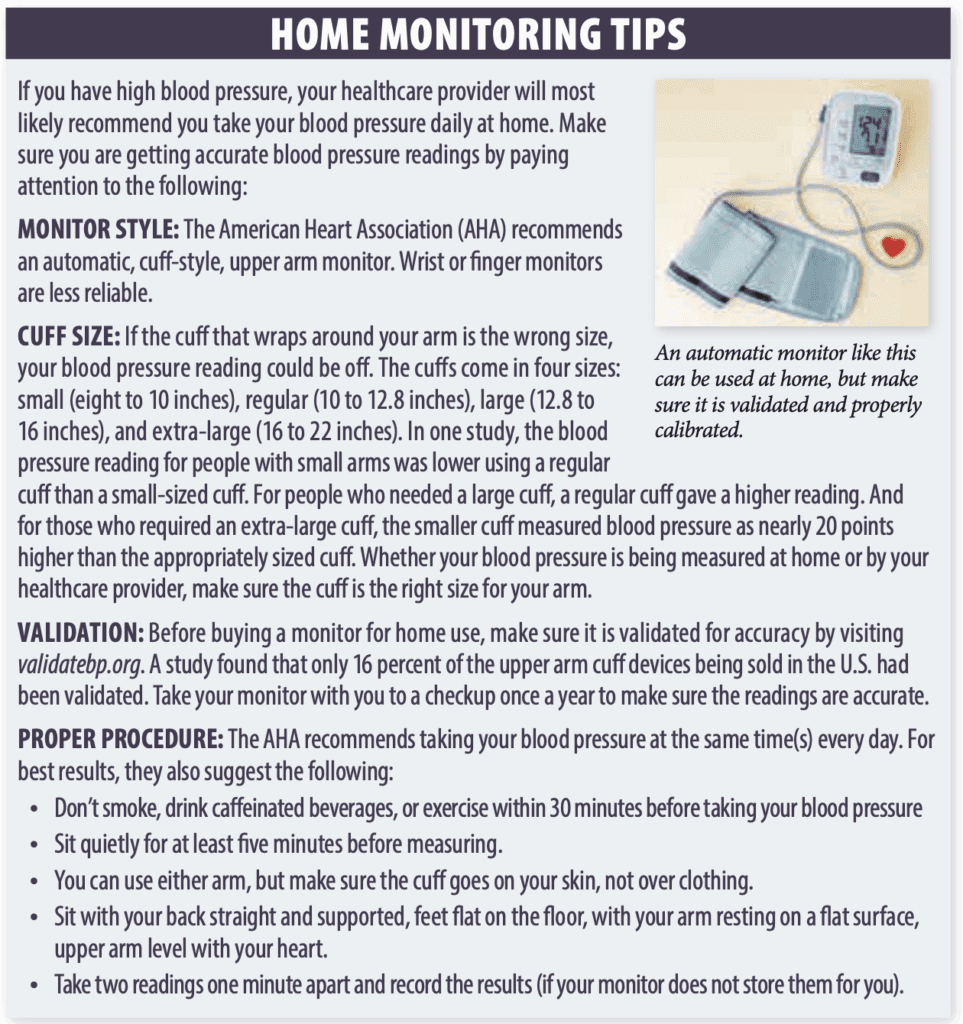
Healthy individuals without a diagnosis of hypertension should have their blood pressure checked annually. Individuals who have a diagnosis of hypertension should measure and record their blood pressures at home as directed. “This allows your healthcare provider to assess trends and make careful adjustments of medications if needed,” says Goodman. Along with the time and readings, Goodman recommends noting the timing of readings with respect to when you took your blood pressure medications.
➧ If your blood pressure is typically normal (120 over 80), have it checked annually.
➧ If you have been told you have high blood pressure, check and record your pressure at home and follow the advice of your healthcare provider to lower and control blood pressure.
➧ If you use a home monitor, buy one that is validated for accuracy and make sure the cuff size is right for you. Bring it to your doctor’s office annually during a scheduled visit to have it checked for accuracy.