






















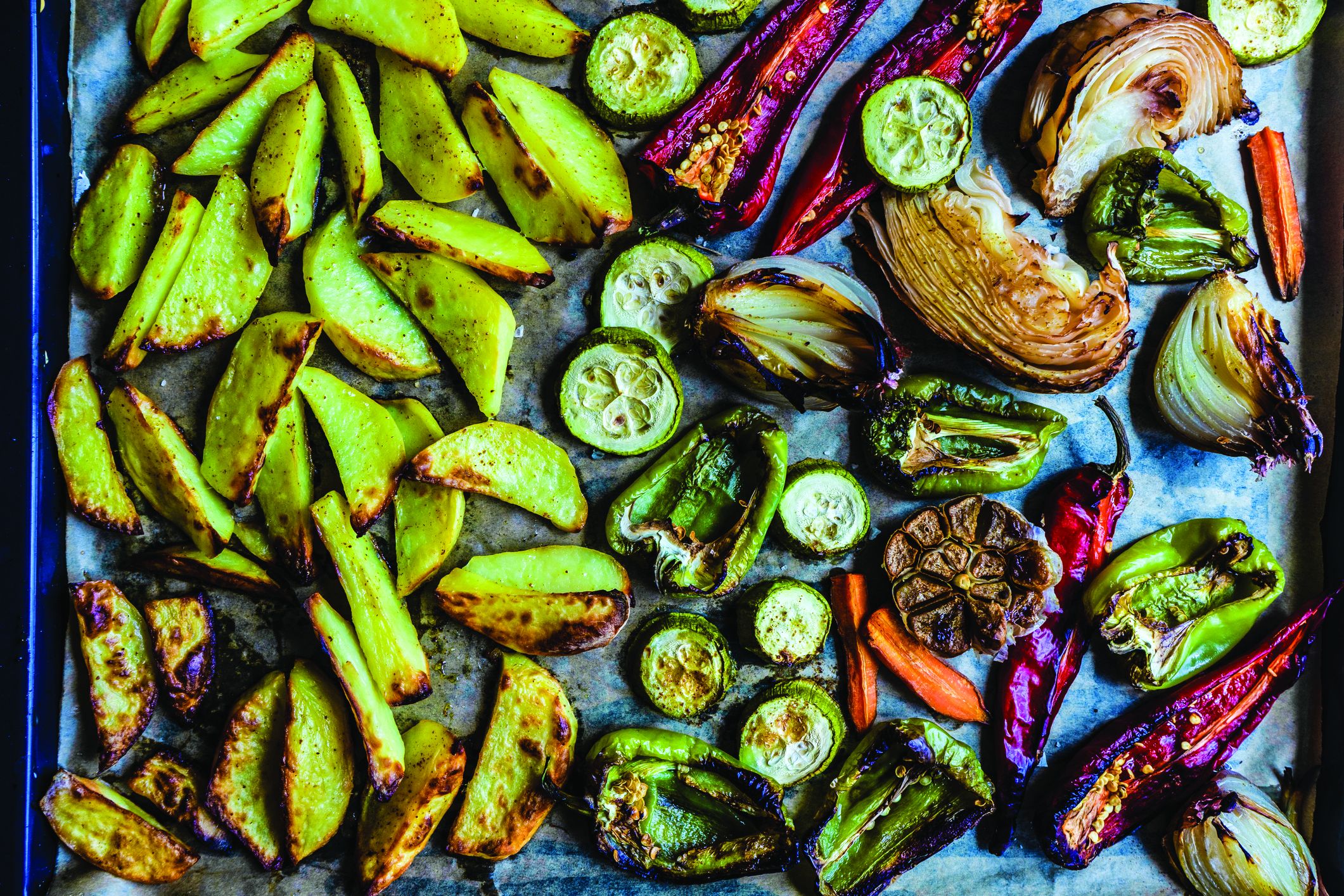
Roasting may change your mind about that particular vegetable you don’t love—or become your new favorite way to eat an old favorite. With some oil, a sprinkling of seasoning, and a hot oven, flavors mellow and sweeten and texture becomes crispy on the outside and tender on the inside.
What to Roast. The high heat used in roasting causes sugar molecules to break down in a process called caramelization. This leads to a sweeter, more complex flavor profile. Additionally, the flavors become more concentrated and the vegetables become crisp on the outside and tender on the inside, rather than mushy.
Just about any firm vegetables (asparagus, bell peppers, onions, zucchini) are good candidates, but root vegetables (potatoes, sweet potatoes, carrots, parsnips, rutabaga), hardy crucifers (broccoli, cauliflower, Brussels sprouts), and any type of winter squash
• Choose Firm. Roasting firm vegetables, like root vegetables, winter squash, and most crucifers, brings the best results of caramelization and crisp edges.
• Be Nutrient Savvy. High heat cooking like roasting reduces levels of some nutrients but makes others more available for the body to absorb.
• Chop Uniformly. Cut vegetables into similar sizes for even roasting and cooking time. Softer vegetables cook more quickly and will need to be added later or cooked separately. • Give them Space. Crowding veggies results in steaming, rather than roasting, so allow visible space between them. Use two pans if necessary.
• Keep Watch. Start checking roasting vegetables for browning at about 15 minutes, then every 10 minutes until fork tender and crisp on the edges but not charred.
Nutrients and High Heat. All forms of cooking, including roasting, can break down some of the more heat-sensitive nutrients in vegetables, such as vitamin C and some B vitamins (thiamine, niacin, folate). But cooking vegetables also makes some nutrients—such as lycopene in tomatoes and red peppers and beta-carotene in carrots and sweet potatoes—more readily available to the body by breaking down the plant’s cell walls. The oil used in roasting vegetables helps the body absorb the fat-soluble vitamins A, E, and K. (Vitamin D, is also a fat-soluble vitamin, but, with the exception of mushrooms that were grown in the presence of UV light, it is rare in unfortified plant foods.)
Roasting is a nutritious way to eat vegetables. Just be careful not to overcook, which could result in charring. Charring, especially in starchy foods like potatoes, can cause the formation of acrylamides, chemicals that have been associated with higher risk of cancer. Check your roasting veggies every 10 to 15 minutes to prevent charring. They’re done when they are fork-tender and lightly browned.
Roasted Veggie Basics. Use these steps as a guideline to roasting vegetables.
➧ Turn up the heat. Preheat the oven to 425° F, which works well for most vegetables. Adjust between 400° and 450° if you prefer. Some recipes recommend heating the sheet or baking pan before adding vegetables to encourage crisp, caramelized edges.
➧ Cut to size. Cut each vegetable into similarly sized pieces to help them cook evenly and be done at the same time.
➧ Pick the pan. Choose a baking sheet pan or baking dish large enough to fit veggies in a single, spread-out layer. Crowding results in steaming, not roasting. Use two pans if needed or try a large sheet pan (18 inches by 26 inches). Dark pans or dishes, like cast iron, encourage browning.
➧ Season. Toss veggies with enough neutral plant oil (about one tablespoon per one to two pounds of vegetables) to coat them evenly. Add seasonings, toss well, and spread veggies in the pan.
➧ Roast. Put veggies in the preheated oven and leave undisturbed for 15 minutes. Check for browning, leaving them longer if necessary. Using a spatula, turn veggies to brown the other side. Remove when they’re fork tender and crisp and golden on the edges. If roasting mixed vegetables with different cook times (i.e., potatoes and mushrooms or tomatoes), add softer veggies to the oven later (possibly in a separate pan).
➧ Finish. Enjoy them as they are, or brighten the flavor with a splash of acid, like citrus juice or vinegar, a light dusting of hard cheese, like Parmesan, or a sprinkling of fresh herbs or red pepper flakes.