
























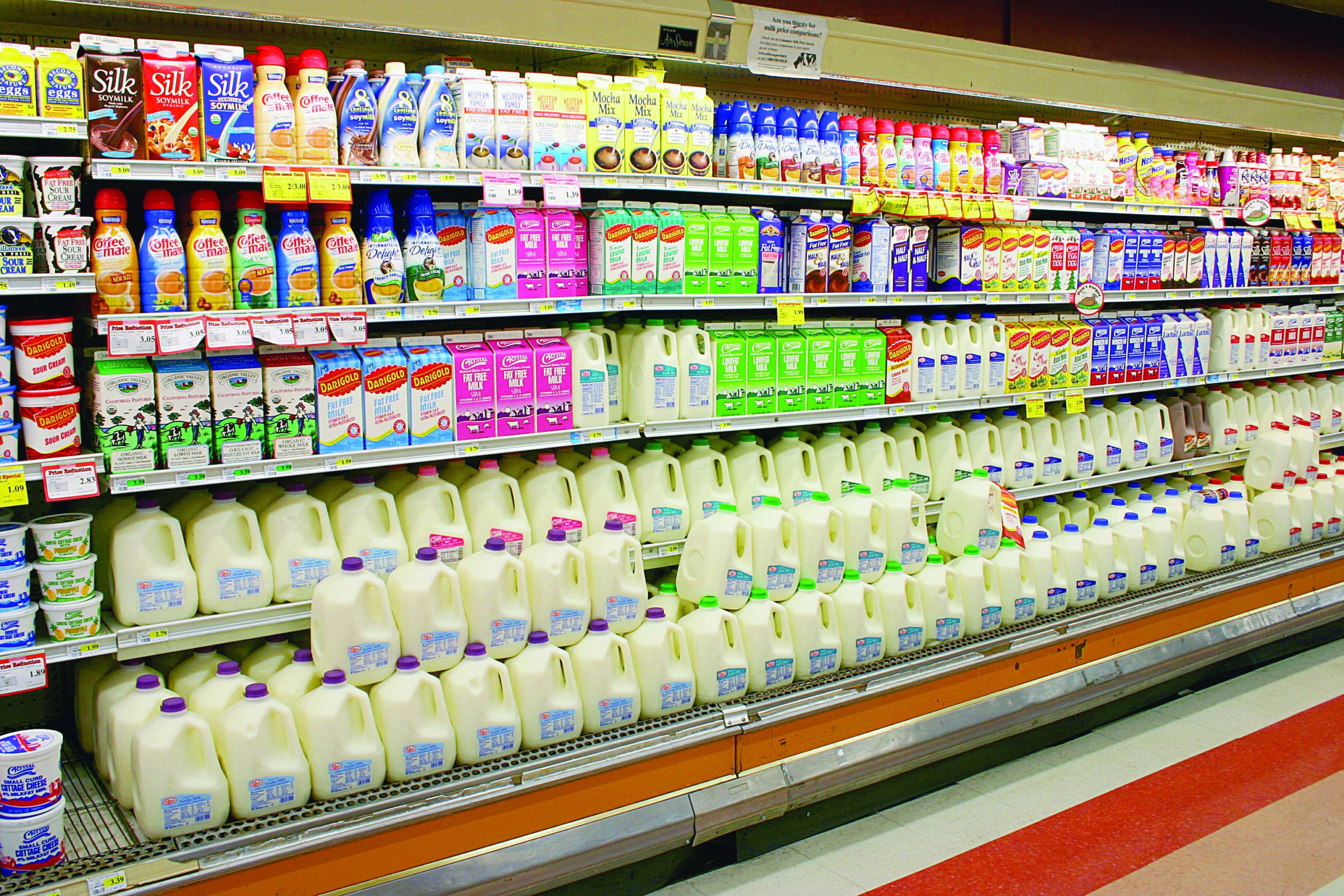
There is a lot of conflicting information out there about cow’s milk and the flood of milk alternatives in the marketplace. Here, we will take an evidence-based look at some of the most common questions so you can make informed decisions that work for you.
Why is consuming dairy recommended?
“Milk and foods made with milk are recommended because they are rich in calcium,” says Alice H. Lichtenstein, DSc, Stanley N. Gershoff Professor of Nutrition at the Friedman School and editor-in-chief of this newsletter. “This mineral, along with regular weight bearing physical activity, is essential to maintaining healthy bones.” (See page 3 for more on activity and bone health.)
Only 20 percent of people in the United States consume three servings of fat-free and low-fat dairy products a day—a recommendation designed to ensure adequate intake of calcium. Calcium is essential to a wide range of functions in the body. “With inadequate calcium intake, the calcium level in the blood declines,” says Bess Dawson-Hughes, MD, a bone health expert and researcher at the Human Nutrition Research Center on Aging. “To return circulating calcium levels to normal, calcium is released from bones. This ensures there’s enough circulating calcium for the body to function properly, but results in weaker bones.”
In addition to calcium, milk and other dairy products (like yogurt and cottage cheese) provide high-quality protein and other essential nutrients, including riboflavin (vitamin B2), magnesium, potassium, vitamin B12, choline, zinc, and selenium. Since vitamins A and D are lost when fat is removed, fat-free and low-fat milk are fortified with these vitamins.
Fermented dairy products, such as yogurt and kefir (pronounced keh-FEER) are probiotic-containing foods that support gut and immune health and promote a healthy gut microbiome. Choose low-fat and fat-free products and those that are lowest in added sugars (check Nutrition Facts labels to compare options).
Why are low-fat (1%) and fat-free milk recommended instead of reduced-fat (2%) or whole milk?
The percentage on a milk container indicates the amount of milk fat by weight. Whole milk is about three-and-a-half percent fat, reduced-fat milk is two percent, low-fat milk is one percent, and fat-free (skim) milk is zero percent fat. Milk fat is high in saturated fatty acids. Saturated fatty acids raise LDL-cholesterol levels, increasing risk for heart disease, heart attack, and stroke. All dairy products provide calcium, protein, and other nutrients, but only fat-free versions provide them without the saturated fatty acids (and calories) that come with milk fat.

What if I can’t tolerate dairy or don’t consume animal products?
In the distant past, humans, like other mammals, did not drink milk once they were weaned. With no need to break down the milk sugar lactose in adulthood, the body often ramped down production of lactase—the enzyme required to break down lactose. The resulting lactose intolerance is common today—but not universal. Genetic mutations have occurred over time which make it possible for many people to digest lactase throughout their lifetimes. Changes to the intestinal microbiome also assist in lactose breakdown, even if lactase enzyme levels are low. For those who have lactose intolerance, lactose-free dairy products and lactase enzyme tablets or capsules that can be taken when consuming dairy are widely available. Some people with lactose intolerance can consume varying levels of fermented dairy products like cheese and yogurt without discomfort, as the fementation process breaks down lactose.
Dairy protein allergy requires total avoidance of dairy products. “If you need or choose to avoid dairy, make sure you are meeting your calcium requirements from other sources,” says Dawson-Hughes. (See “Some Sources of Dietary Calcium” for requirements and ideas for meeting them.)
What about milk alternatives?
Although most are fortified with calcium and vitamin D, plant-based “milks” do not have the same vitamin and mineral profile as cow’s milk. With the exception of soy- and pea-based products, they contain considerably less (and often no) protein (see “Select Nutrients in Milk and Milk Alternatives”).
The raw materials used to make a plant-based “milk” may impart their own specific nutrients. Hemp milk, for example, claims to be a source of omega-3 and omega-6 fatty acids (essential fatty acids not found in cow’s milk). Oats contain beta-glucans, fiber associated with lower LDL (bad) cholesterol. Oat milk does have some of these beta-glucans, but research suggests the homogenization and heat treatments used in making oat milk may alter their healthful properties.
Plant-based milk alternatives are thought to have a lower impact on the environment than dairy products, since, pound-for-pound, production of plant foods emits less greenhouse gases and requires less land than production of milk.
Animal-free dairy products are now becoming available. Microflora are genetically modified to make a milk protein identical to that found in cow’s milk. Oils, sugars, and other ingredients are added.
If you decide to choose a milk alternative, minimize added sugars by choosing unsweetened varieties. It’s important not to give (non-soy) plant-based beverages as a milk-replacement for young children without first consulting their physician.
What is A2 milk?
Most milk in the U.S. comes from cows that produce the A1 form of a protein called beta-casein. It is thought that some people are sensitive to the A1 protein, so consuming it causes issues such as bloating, gas, and abdominal pain. A2 milk comes from cows with a gene that produces only the A2 form of beta-casein, which is generally considered to be more easily digested. The A1 and A2 proteins differ by only one amino acid. (Note: A2 milk does contain lactose.)
A2 milk can be purchased at some grocery stores and online retailers. It’s important to note that not all scientific evidence supports the claims about the benefits of A2 milk. If you have any concerns about your digestion or milk tolerance, talk to a healthcare professional.

Are there benefits to drinking raw milk?
Far from being beneficial, raw milk can actually be dangerous. Disease-causing bacteria like Salmonella, E. coli, and Listeria can get into milk from the cow itself, contaminated hands of people handling the cow or the milk, and improperly cleaned equipment or packaging. Now, the avian flu virus has been identified in U.S. dairy cattle and virus fragments have been found in raw milk from infected cows.
The process of pasteurization (exposing the milk to mild heat) kills bacteria and viruses that can make you sick. It also deactivates enzymes that contribute to food spoilage.
Federal law prohibits the sale of unpasteurized (raw) milk across state lines, but some states allow it to be sold at farms or in retail stores. An analysis by scientists at the U.S. Food and Drug Administration examined numerous claims made by raw milk advocates and found that none were supported by science. (If you want to see this data, go to https://www.fda.gov/food/buy-store-serve-safe-food/raw-milk-misconceptions-and-danger-raw-milk-consumption.)
➧ Check the Fat. If you choose cow’s milk, reach for the fat-free or low-fat to reduce saturated fat intake.
➧ Get Calcium. Make sure you have at least three servings of calcium-rich or calcium-fortified food a day.
➧ Remember Lactose Free. If you have trouble digesting lactose, look for the many lactose-free products, or use enzyme tablets or capsules just before eating.
➧ Watch sugars. If you must avoid cow’s milk, choose substitutes that have little or no added sugars.