














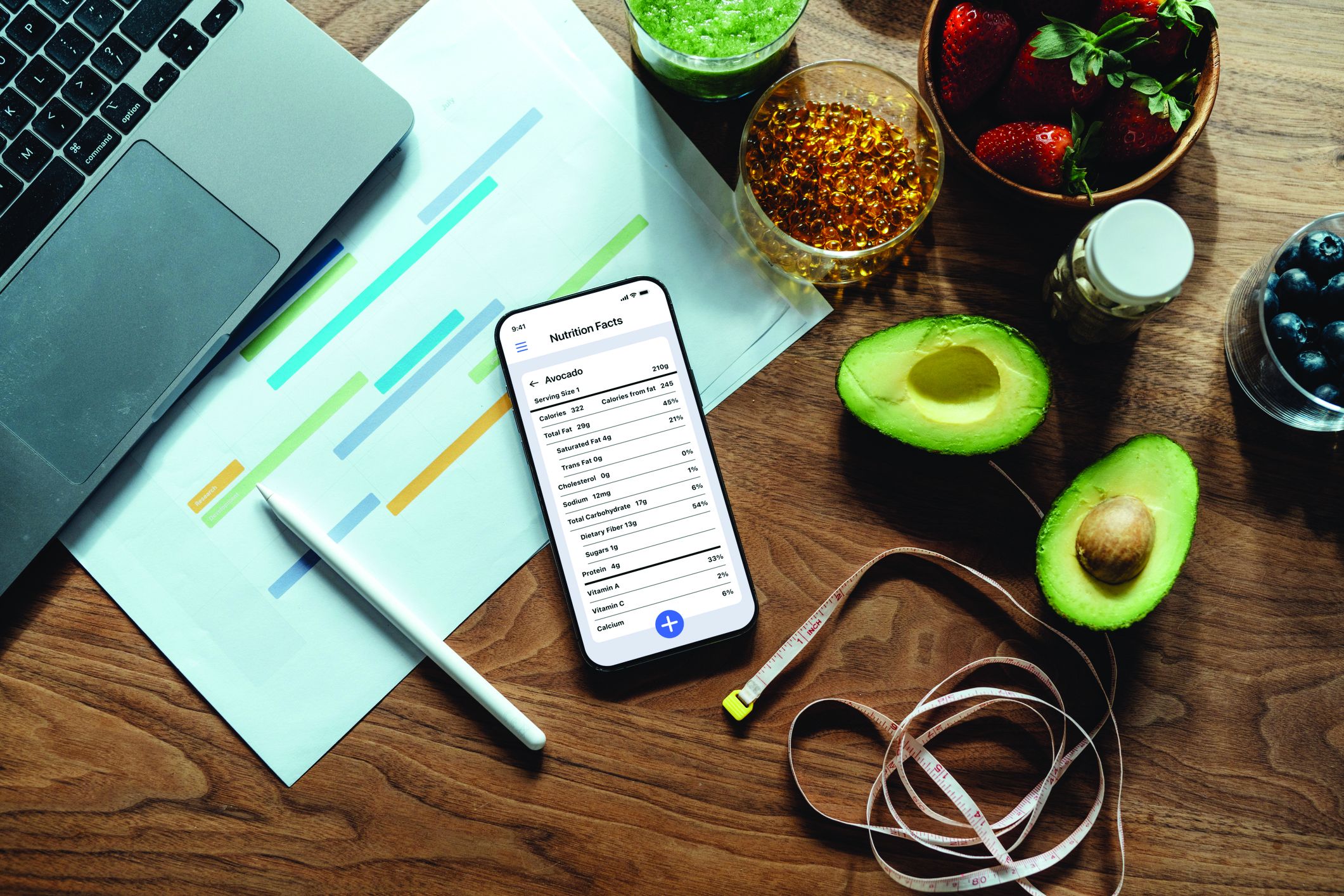
If you want to lose weight—or keep from gaining—chances are you’re very aware of calories.
You consume them in foods and beverages. You “burn” them through physical activity. You gain weight if “calories in” is greater than “calories out.” But what are they? And does tracking them contribute to staying healthy?
Heat and Energy. A calorie is simply a unit of energy. (One calorie equals the amount of heat required to raise the temperature of one gram of water by one degree Celsius.) How many calories something has, therefore, is a measure of how much energy it provides. The things we eat and drink don’t contain calories, per se, they contain protein, carbohydrates, fats, and alcohol the body can break down to produce energy. Note that vitamins and minearls do not provide calories. But many are essential to the processes that allow us to get energy from food.
(You may find it interesting to learn that, although we call them “calories,” we actually measure the energy from food in kilocalories, or units of 1,000 calories each.)
Calories Count. If we take in more energy than we need, the body stores the excess for later. If we take in more energy than we need, the body stores the excess for later. A limited amount of energy is stored in our muscles and liver to be quickly released as needed. Think of this as our short-term storage. Anything beyond what is needed right away and what the short-term energy storage areas can hold is stored in adipose cells as fat.
Over time, taking in more energy—more calories—than your body burns leads to an increase in body fat. Excess body fat is associated with a myriad of health problems, including higher risk for heart attack, stroke, type 2 diabetes, and some cancers.
If you want to cut calories, tracking how much you eat and drink with the help of an app may help you determine where your calories are coming from (too many caloric drinks, snacks, or desserts?). You can then identify areas where you may be able to cut back or swap for less calorie-dense choices (see “Calorie Density” below).
Nutrition Counts, Too. It’s important to understand that calories are not the only thing that counts. Being well nourished is essential to health. Foods and beverages don’t just provide you with energy—they provide you with essential nutrients. The body needs carbohydrates, protein, fat, vitamins, minerals, and fiber (and likely the phytochemicals from plant foods as well) to function properly. If you were able to track all the calories you took in and balance them with the calories you used, you could maintain your weight, but not necessarily your health.
One of the pitfalls of counting calories is the misguided idea that “a calorie is a calorie.” As far as energy needs and fat storage are concerned, calories from an orange are the same as calories from orange-colored gummy candy. But the fruit provides essential nutrients that our bodies need—like fiber and vitamin C— and the candy does not.
Count Me Out. Counting calories is also time consuming, sometimes frustrating, and difficult to do accurately or maintain long-term. In some people, it can contribute to a negative relationship with food, which is a risk factor for disordered eating.
Strategies that don’t require logging foods, tracking activity, and calculating ratios can help us build a healthier relationship with food and prioritize overall health and well-being over appearance.
No Counting Needed. To increase “calories out,” be as physically active as possible. To cut “calories in” without counting, consider these key factors that influence calorie intake:
➧ Calorie Density. Calorie density refers to the number of calories in a given weight of food, regardless of volume, such as calories per 100 grams or calories per pound. A food with high calorie density has a large number of calories in a small amount of food. To get that same number of calories from a low-calorie-dense food, you’d need to eat a much greater volume. For example, a quarter-pound fast-food hamburger patty (without the bun or toppings) has about 300 calories. That’s the same number of calories as two pounds of strawberries (about five-and-a-third cups). While no one would suggest eating that many strawberries in one sitting, it’s clear that if you sat down and ate strawberries (or any other vegetable or fruit) until you were full, you’d consume many fewer calories than if you ate burgers until you were full.
To cut calories: Choosing foods with lower calorie density can help you feel full on fewer calories. Foods that are typically the most calorie dense are fats and oils and products made with them, full fat dairy products like cheese, and baked goods rich in fat and sugar. Water-rich foods like vegetables and fruits are low in calorie density. Whole grains and lean meats are less calorie dense than refined grains and fatty meats.
(Note that all fats are calorie dense, but essential unsaturated fats are critical for health. So, choose unsaturated fats like non-tropical plant oils instead of animal fats.)
➧ Liquid Calories. Drinking contributes to filling and stretching the stomach, which helps us feel full, but we don’t tend to adequately compensate for the calories we drink by eating less food. In other words, a meal that includes a single 12-ounce ginger ale is going to have roughly 120 calories more than the same meal with an equivalent amount of water or unsweetened tea or coffee (hot or iced). That’s not a lot, but it can add up over time.
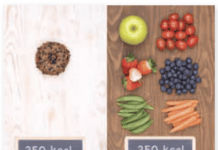
It’s also easy to gulp down a beverage quickly, so you could consume a lot of calories without realizing it. As an example, one brand of store-bought “just fruit” strawberry-banana smoothie has 250 calories in one 15-oz serving that can be guzzled down in minutes. That’s the same number of calories as one banana and 33 strawberries. The smoothie might have plenty of vitamins and minerals, but you can cut your calories by eating some fruit—and you’ll still meet all your nutrient needs if you make smart choices like that most of the time.
To cut calories: Stick mainly to calorie-free beverages with (and between) meals.
➧ Food Texture. We can eat soft foods more quickly than hard, chewy, or crunchy foods. That means it’s easier to take in more calories with soft options like noodles, cakes, smoothies, and fries than with vegetables, fruits, whole grains, and proteins like chicken and shrimp in the same amount of time. Many soft foods (like donuts and garlic bread) are also calorie dense, while many whole or minimally processed foods (like apples and salad) require more chewing.
To cut calories: Choose foods that need to be chewed. This causes you to eat more slowly, giving your body time to signal it is full.
➧ Portion Size. We eat more when presented with larger portions. Unfortunately for our waistlines, the portions in packaged foods and many items we are served (and serve ourselves) are much larger than they used to be. A “small” order of fries at Burger King originally weighed 2.6 oz; now it is 4.5 oz (“value size” is 3.1 oz). A bottle of Coca-Cola was 6.5 fluid ounces (fl oz) when it was released in 1916; today, a 20 fl oz bottle is labeled as “1 serving,” and the smallest available bottles are 8 fl oz.
Eating smaller portions is associated with lower calorie intake, and therefore less weight gain over time. (Especially if you limit calorie-dense choices and emphasize foods with lower calorie density.)
To cut calories: Research suggests a number of tips for controlling portion size, including:
➧ Use smaller plates, bowls, and glasses. We tend to fill what we have (and eat it all).
➧ Get a doggy bag. When eating out, don’t be afraid to ask for a “to-go” box at the start of the meal. Pack up some of your meal, and see if you really need more after eating the remaining portion.
➧ Slow down. Eating slowly gives your brain time to let you know you are full. Chewing food well and setting your utensils down between bites can both help.
➧ Keep serving dishes off the table. Remove the temptation to reach for more by putting food on your plate before sitting down.
➧ Listen to your body. Actively pay attention to your body’s hungry/full signals. In addition to slowing down, this means avoiding distractions like television and smart devices during meals.
➧ Don’t “supersize” it. Choose the smallest versions of menu items.
These factors fall into two main categories: diet quality and mindful eating. A high-quality diet includes plenty of vegetables, fruits, beans and lentils, whole grains, low-fat and fat-free dairy, and lean animal proteins and limits sodium and added sugars (including those in sugary beverages). Many of the foods that meet these specifications have low calorie density and/or take time to chew. They also provide plenty of fiber and other essential nutrients. Eating mindfully means considering if you are eating for reasons other than hunger, thinking about appropriate portions and eating them slowly, and listening to the hungry/full signals from your body.
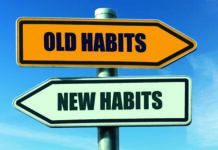
With these strategies in mind, consider some permanent changes you are willing to make to your dietary (and activity) habits. You’ll improve your health, do away with the need to count calories, and likely lose some weight as well!
➧ Consider Density. Choose more foods with less calories per bite, like vegetables and fruits, and limit unhealthy foods with high calorie density, like bacon and pasteries.
➧ Don’t Drink Calories. Stick mainly to naturally calorie-free beverages like water, seltzer, and coffee and tea without added sugar.
➧ Chew it. It’s easier to overeat soft foods. Choose foods that require chewing, and chew them slowly.
➧ Watch Portions. Smaller plates, bowls, and cups, keeping serving dishes off the table, and getting a “to-go” container at the start of a restaurant meal can help keep portion sizes down.
➧ Be Mindful. Get to know your body’s hungry/full signals.