


























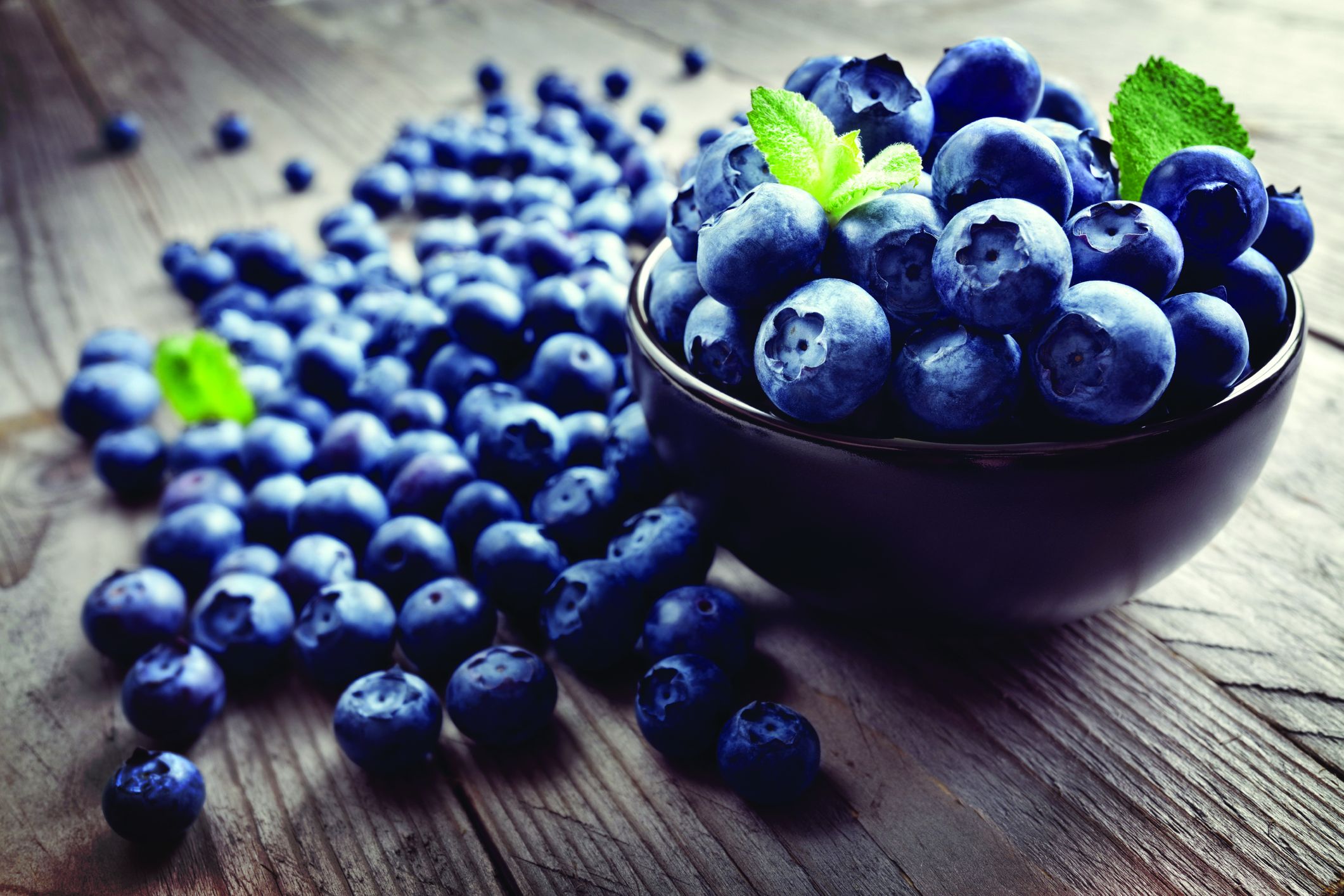
Blueberries are one of the few fruits native to North America. Native American tribes called them “star berries” for the five-point “star” at the blossom end of the berry. Marketers call them a “superfood,” although other dark-colored berries have a similar nutrient profile. Flavorful, versatile blueberries are a great choice—fresh, frozen, and even dried.
The Basics. Blueberries are part of the genus Vaccinium, along with cranberries, huckleberries, and lingonberries. There are nearly 150 varieties of blueberries, which are categorized into three general groups: highbush (the most commonly cultivated, which tend to be large), lowbush (smaller, intensely-flavored fruits also called wild blueberries), and rabbiteye (a heat-tolerant variety with large fruits native to the Southeastern U.S.).
Nutrition. A one-cup serving of blueberries is a good source of dietary fiber, providing 14 percent of the Recommended Daily Value (DV). It is an excellent source of vitamin C, vitamin K, and manganese, providing more than 20 percent of the DV of each. Their deep blue-purple color comes from phytochemicals called anthocyanins which are known for their antioxidant properties (although they have not been proven to have specific health benefits).
➧ Go Local. If you can, choose seasonal, local blueberries for freshness, the environment, and price.
➧ Go Beyond Fresh. Other forms of blueberries are just as tasty and nutritious: explore frozen, dried, and canned.
➧ Be Creative. Dive into the many ways to incorporate all forms of blueberries into your diet.
➧ Swap! Use blueberries to replace sugars in foods like yogurt, cereal, and pancake toppings. Use blueberries to replace sugars in foods like yogurt, cereal, and pancake toppings.
Go Blue! Fresh blueberries are in season—with highest flavor and lowest price—through October. Look for locally-grown blueberries (which have lower greenhouse gas emissions than those that must be shipped to your area) at supermarkets, farmers markets, produce stands, in the wild (if you live in or around Maine), or in your own garden. If you find yourself with a surplus of fresh berries, freeze them for later.
In the off season, fresh blueberries imported from South American countries are almost always available. Other forms of blueberries are also available year-round at a better price point, including frozen, dried, and canned. Read packages to avoid products that contain added sugars. There are endless possibilities for incorporating blueberries of all forms into your diet to bring color, natural sweetness, and nutrients to the table.
Healthy swaps are a great way to start. Blueberries are naturally sweet, so they are an easy substitute for sugary standards, like chocolate chips, syrups, jams, and yogurt flavorings.
• Replace chocolate chips in cookies and baked goods with fresh, frozen, or dried blueberries (stick to dried for cookies).
• Top whole grain pancakes, waffles, and toast with fresh, thawed frozen, or canned blueberries instead of syrup or jam.
• Stir fresh, frozen, or canned blueberries into plain, nonfat yogurt instead of buying flavored yogurt.
• Flavor water or sparkling water with fresh or frozen berries or a splash of blueberry juice in place of expensive flavored waters and sugary sodas.
• Swap fresh, dried, or freeze-dried blueberries for croutons in salads.
See “Buying and Using Blueberries” for more tips and ideas.
Now is the best time to take advantage of fresh, seasonal blueberries and other summer fruits. Nutritious, hydrating, versatile, and delicious, enjoy the bounty while you can by adding them to meals and making them a go-to snack.
