





















From tuna, salmon, and anchovies to sardines, herring, trout, and mackerel, there are many fish in the sea that are preserved by canning. These nutritious sources of protein are shelf-stable, budget-friendly, easy to prepare, and versatile.
Though nutrient content varies among the different types, brands, and varieties of canned fish, fish in general provides many important nutrients, including protein, iron, calcium, and omega-3 fatty acids, and it’s one of the few natural sources of vitamin D.
Omega-3 fatty acids—which are a vital part of cell membranes and the starting material for many molecules that regulate a wide range of body functions—are essential: the body can’t produce them, so we need to get them from foods like fish. (Fattier fish have more omega-3 fatty acids.)
Dietary patterns high in fish are associated with lower risk of heart disease. Not only is fish an excellent source of healthy unsaturated fats like omega-3s, but it also replaces meat—which is high in saturated fat—on the plate.
The Dietary Guidelines for Americans recommend adults consume at least two four-ounce servings of fish or other seafood per week. Shelf stable for up to five years, canned fish makes eating a variety of seafood more convenient. Here, we address some of the most common questions about canned fish.
What types of fish are available in cans? In addition to tuna and salmon, anchovies, sardines, smoked trout, and fillets of herring and mackerel are readily available.
Can I eat the bones in canned fish? Absolutely! The heat of the canning process makes the bones very soft and easily digestible. Fish typically canned with their bones, such as salmon, sardines, and anchovies, are a good source of calcium.
Are pre-flavored or brined options a good choice? Packets of pre-flavored tuna or salmon are convenient and typically lower in calories than salads prepared with mayonnaise, but some are high in sodium. Canned fish that has been smoked, pickled, or brined—like herring, trout, and some sardines, anchovies, and mackerel—are often high in sodium. Compare labels to choose lower-sodium varieties.
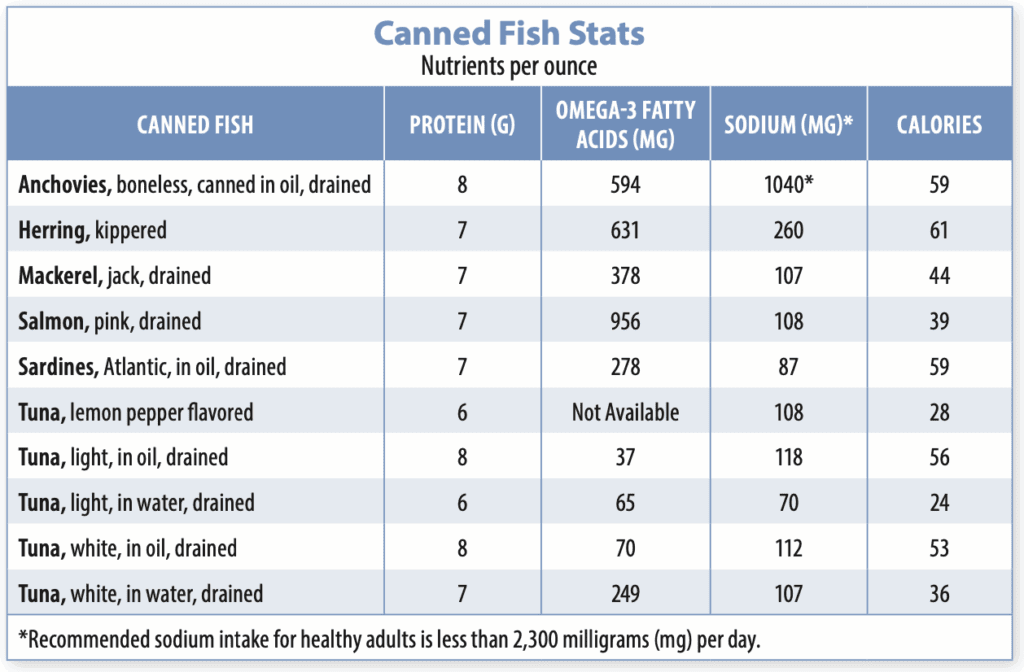
For tuna, which type is best? Canned tuna packed in water is firmer and drier than oil-packed, which is moister and has a deeper fish flavor. Note that omega-3 fatty acids are oil-soluble, so drained tuna in oil has fewer omega-3s than drained tuna in water (but also less calories). See “Canned Fish Stats” for more nutrient comparisons.
Chunk tuna contains smaller pieces that don’t all come from one fish. Solid tuna is cut from a single cut of fish, and pieces are larger and firmer than chunk.
Light tuna can refer to a variety of tuna species or include a mix of several, such as skipjack and yellowfin. White tuna is albacore. Because alboacore tuna is a larger, fattier fish, levels of omega-3s will be higher in white tuna, but levels of contaminants like mercury may be as well.
➧ Diversify. Eating canned fish can help you reach the recommended minimum two servings of fish per week.
➧ Save Cash. Canned fish is typically much less expensive than fresh and frozen, and it has a much longer shelf life.
➧ Try Sardines! Or anchovies, or salmon—there are canned fish varieties to explore beyond tuna, and some have the added benefit of higher levels of calcium.
How do I use canned fish? Eat canned fish straight from the can or packet, or use it in a variety of dishes. Try tuna or salmon on whole grain crackers or bread, over a green salad, or in patty, casserole and pasta recipes. Anchovies make a traditional Caesar salad dressing, they add depth (umami) to sauces like puttanesca or a slow-cook pot of beans, and they are a classic pizza topping. Sardines, smoked trout, and herring and mackerel fillets are typically eaten from the can on crackers or bread, but they can also add flavor to pesto, dips, egg dishes, or avocado toast.
Explore new ways to up your fish intake with these convenient, tasty canned options!