





















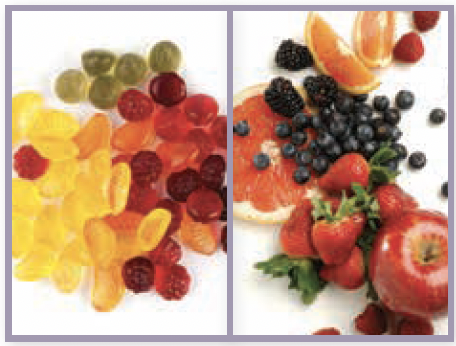



Q. I have a new blender that will take a whole fruit and turn...
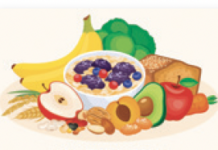
A. Kelsey Watson, a dietetic intern at Tufts Frances Stern Nutrition Center, answers: Youre right in recognizing that fruit contains many valuable nutrients, including fiber, a nutrient for which most Americans do not meet the daily recommendation. Most of a fruits fiber is contained in its peel and pulp. For example, the edible portion of a medium orange contains 2.66 grams of fiber, while four ounces of orange juice contain only 0.23 grams of fiber.…

Added Sugars Add to Your Heart Risk
Previous studies have linked added sugar, such as in non-diet soft drinks and other beverages, to increased risk of key factors in heart disease-including weight gain, hypertension, type 2 diabetes and unhealthy cholesterol levels. Now, for the first time, a new analysis of nationwide dietary data has found an association between consumption of added sugar and higher risk of death from cardiovascular disease.
Whole Grains Gaining
Americans are slowly getting the positive message about whole grains, but we still have a ways to go, according to a new University of Minnesota study of data on more than 9,000 people from a national nutrition survey. The study, funded by General Mills, found that ready-to-eat cereals, oatmeal and breads and rolls accounted for about two-thirds of whole-grain intake. Only 7.7% of adults, however, consumed at least the recommended three ounce equivalents daily, and even fewer children were getting enough.
Website Gets a Makeover
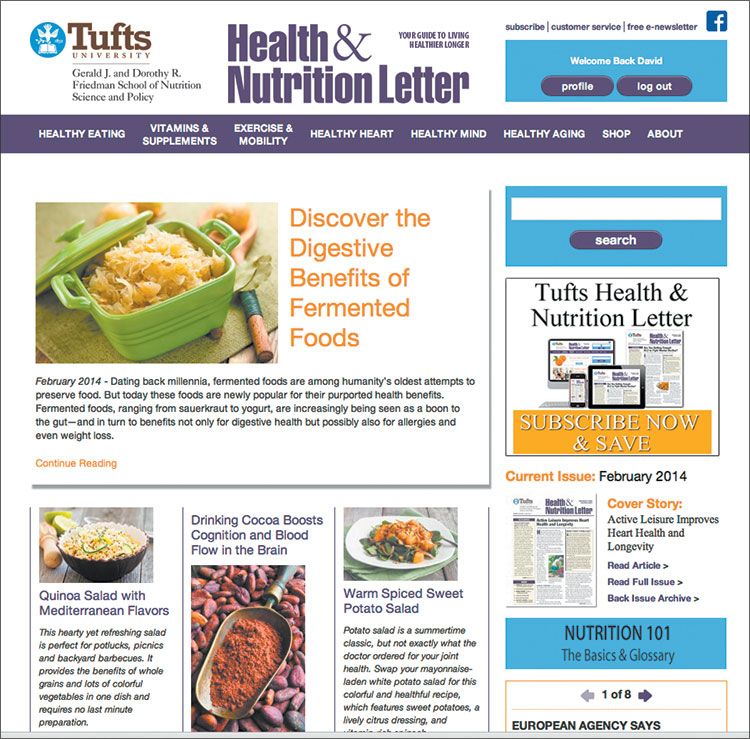
Eagle-eyed readers may have noticed a different website address in this newsletter, . Thats because our website is different, too-completely redesigned, easier to navigate and now including our nutrition-smart recipes.
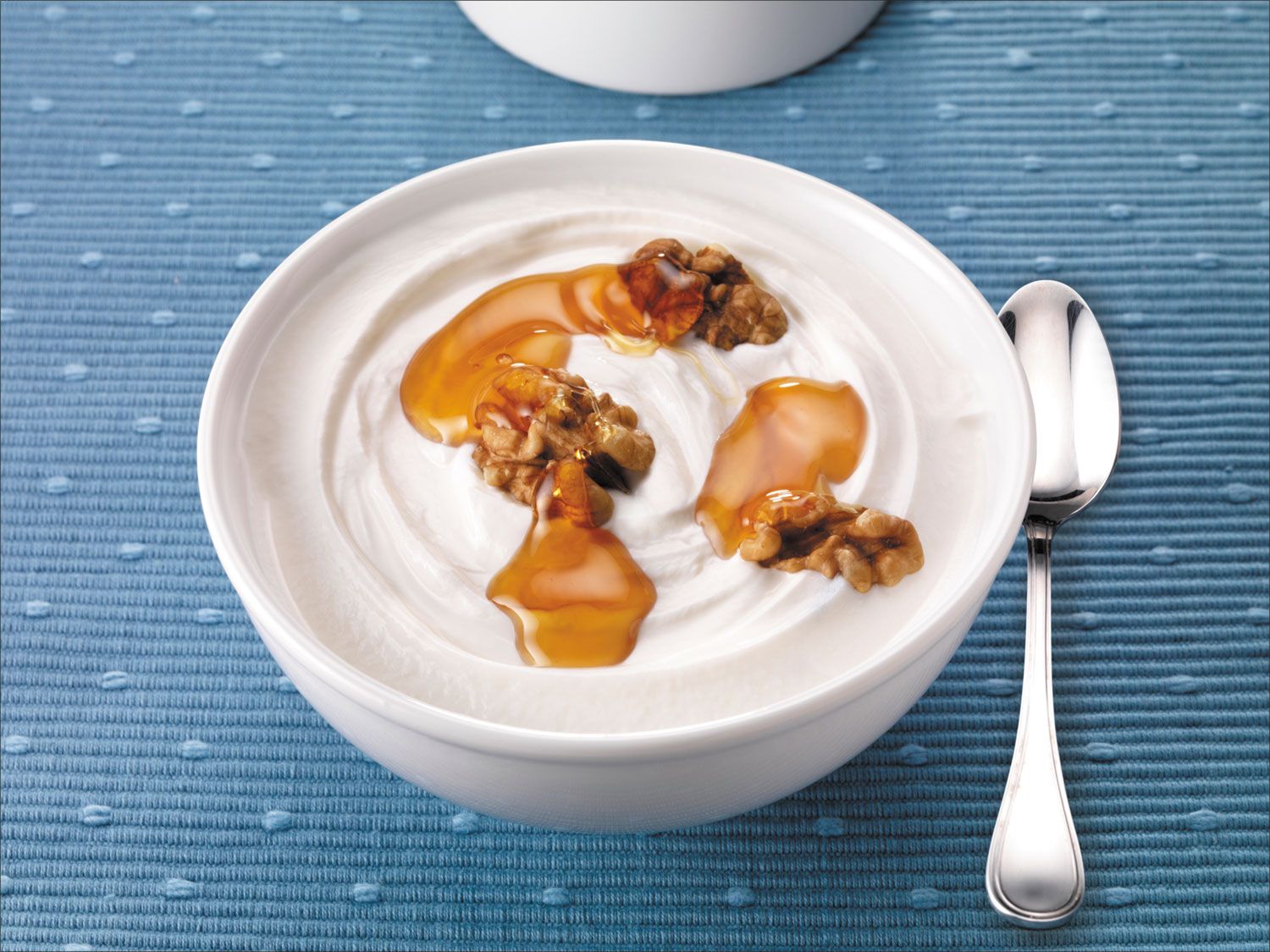
Whats So Great About Greek Yogurt?
Besides the Seahawks and Broncos, viewers of this years Super Bowl saw two other fierce competitors: Greek yogurt brands, slugging it out in commercials. That would have been unthinkable only a few years ago-in 2008, Greek yogurt accounted for only 4% of US yogurt sales. But today Greek yogurt makes up 44% of the multibillion-dollar US yogurt market and is responsible for almost all the growth in this part of the grocery aisle. More than half of US households bought Greek yogurt last year, according to retail research firm IRI.
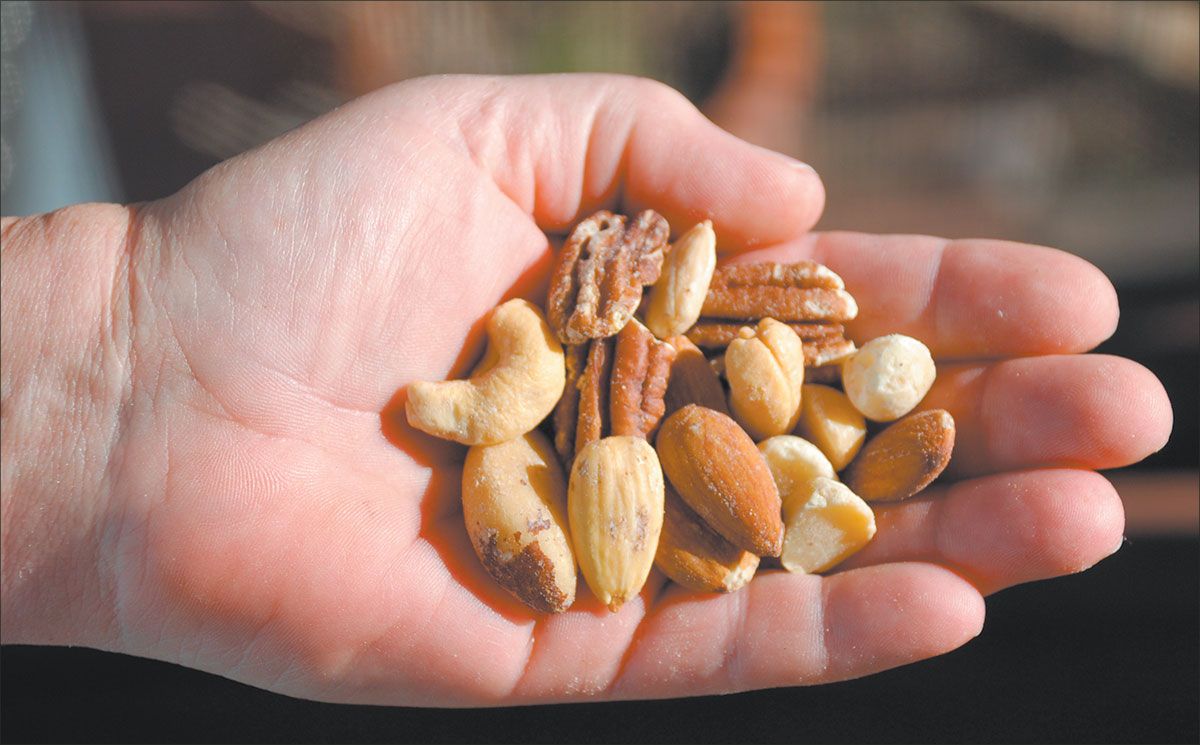
Daily Handful of Nuts Linked to Lower Mortality Risk
Eating a daily handful of nuts-about one ounce or three tablespoons-could reduce your risk of dying from the most common causes of death. Results from the largest study of its kind, following nearly 119,000 men and women for up to 24 years, show that regular consumers of any type of nuts were less likely to die from heart disease, cancer and lung disease or from all causes than non-nut eaters. As frequency of nut consumption went up, mortality risk dropped.
Fessing Up on Unsafe Food Handling
When it comes to safe food handling for parties and other gatherings, Americans motto seems to be: Do as I say, not as I do.
Dietitians Predict Nutrition Trends
Look for more worries about wheat and increasing interest in ancient grains, kale, coconut oil and chia seeds as 2014 goes on. Thats the forecast from a survey of more than 500 registered dietitians conducted by Todays Dietitian and Pollock Communications.
FDA Extends Trans Fat Comment Deadline
Look for the next step in the FDAs proposed crackdown on trans fats to come this spring, as the agency extended its comment period on the rule to March 8. Late last year, the FDA proposed revoking the fats status as generally recognized as safe (GRAS), which would lead to a phase-out of trans fats in most food products.

Does Your Diet Deliver Too Much Phosphorus?
Phosphorus, a mineral found in foods such as meat and milk, is important for forming bones and teeth, making proteins for healthy cells, and transporting cellular energy. But too much of a good thing can be harmful among people with kidney disease, and a new study suggests excess phosphorus consumption is associated with increased mortality risk, even in people with normal kidney function.