













Picnics and cookouts are great ways to get outside and enjoy the warm, sunny weather on July 4th or anytime this summer, but food sitting out in hot temperatures can increase the risk of foodborne illness. A few food safety measures during food preparation, storage, cooking, and serving can help minimize this risk.
Be Aware. According to the Centers for Disease Control and Prevention, one in six Americans gets sick from foodborne illnesses each year, with an estimated 128,000 hospitalizations and 3,000 deaths. Foodborne illness, also known as “food poisoning,” tends to peak during the summer months. Older adults, young children, pregnant women, and people with weakened immune systems are at highest risk.
The most common pathogens that cause foodborne illness are Salmonella, Listeria, and E. coli. These bacteria thrive in warm, wet conditions, like raw meat or potato salad sitting out in the sun. The “danger zone” where these organisms can grow quickly is between 40°F and 140°F. Follow the “two-hour rule”: perishable foods should not be allowed to sit in this temperature range for more than two hours before being refrigerated, frozen, or tossed. (When the temperature is above 90°F, food is safe outside for only one hour.)
Keep it Clean. Cleanliness is the first step in avoiding foodborne illness. Washing reduces pathogens from hands, produce, surfaces, and utensils.
➧ Prep Food at Home. Prepare for a cookout as much as possible at home to more easily keep everything that touches your food clean.
➧ Keep it Cool. Pack coolers tightly with adequate cold sources and keep them out of the sun.
➧ Measure It. Use a food thermometer when cooking meat, poultry, and seafood to ensure it reaches the minimum safe internal temperature.
➧ Toss It. Throw away food that has been in the danger zone (between 40°F and 140°F) longer than two hours (or one hour if the temperature is over 90°F.)
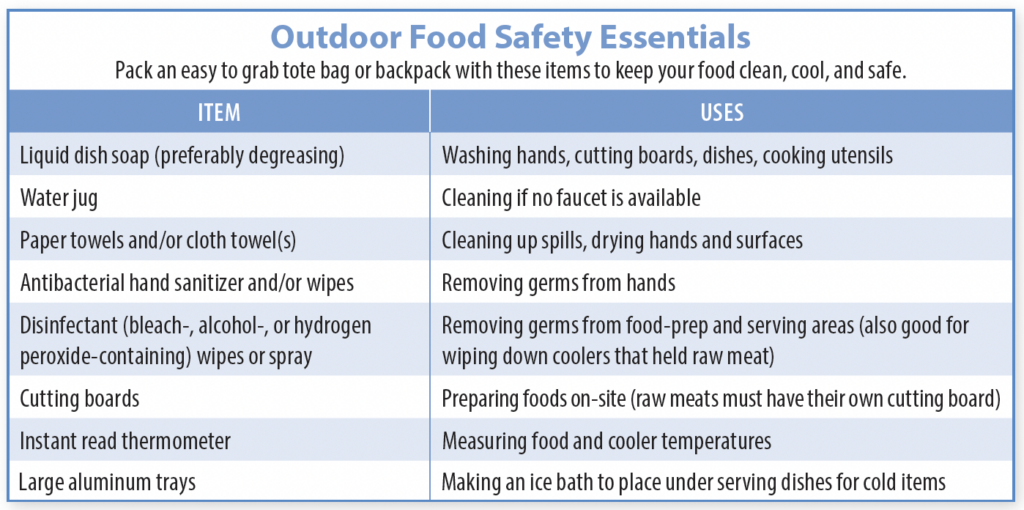
Home kitchens are best equipped to handle food prep tasks safely, so do as much preparation at home as possible. For food prep on your outing, consider the available resources at the venue and pack items that will not be available.
Be Chill. Make sure you have plenty of ice packs and ice to ensure your food is kept cold. Remember, if food is above 40°F for more than two hours, it may no longer be safe to eat. Chill coolers ahead of time by packing them with extra bagged ice, dry ice, frozen water bottles, or ice packs several hours or the night before your cookout.
Be sure to cool perishable foods completely in the refrigerator, at least overnight if you can, and pack them into a cooler just before leaving. If possible, pack separate coolers for uncooked meats, poultry, and seafood to keep them away from foods that won’t be cooked to avoid leakage and contamination. Because coolers with beverages tend to be open frequently, they can warm up more quickly. Consider using a separate cooler for drinks to avoid raising the temperature of perishable foods.
Coolers keep foods cold longer when they are packed full than when partially filled. Fill any unfilled space with extra ice or ice packs. Frozen water bottles can be used to keep other foods cold, with the added benefit of nice, cold water later in the day. Transport coolers in an air-conditioned space in your vehicle, not the hot trunk. Upon arrival, put the coolers in a shady space, out of direct sun, and cover with a blanket for insulation and to discourage frequent opening, which raises the temperature. Don’t leave coolers in a hot car.
Gauge the Heat. When it’s time to grill, use a food thermometer to check that beef, pork, and fish are cooked to an internal temperature of at least 145°F and poultry and ground meats are cooked to 165°F. Whenever possible, cook meats as close to serving time as possible. Dispose of leftover marinades or sauces that have been in contact with raw meats. Be sure to keep cutting boards, plates, and utensils that have been in contact with raw meats away from cooked meats and other food items.
Serving Tips. Keep hot foods hot. Meats can be kept warm by moving them out of direct heat, onto the side of the grill until ready to serve. Serve directly from the grill or keep hot foods in insulated containers or wrapped in foil or a towel. Use chaffing dishes if you can, and, if electricity is available, warming trays, slow cookers, and even heating pads can be helpful.
Remember, don’t let food remain in the danger zone (between 40°F and 140°F) for more than two hours (or one hour in 90°F or higher temps). To keep cold foods cold, place the serving dishes inside larger bowls or containers filled with ice. You can also cradle or wrap serving dishes with pliable frozen gel packs or blankets, serve from an insulated pre-chilled container, or divide portions among smaller serving platters to swap out with fresh, chilled ones from a cooler. Once the serving rush has slowed, cover dishes with lids or silicone, foil, or plastic to help maintain their temperature.
Toss It? If your food has been out too long, it may not be safe to eat. Respect the two-hour rule for perishable food (including meat, poultry, fish, dairy, eggs, and cut produce, and cooked leftovers). Pay attention to any changes in a food’s color, smell, or taste. Although most pathogens that cause food poisoning do not change the taste, smell, or appearance of food, if any food seems “off” or bad, don’t risk it. Toss it.