






















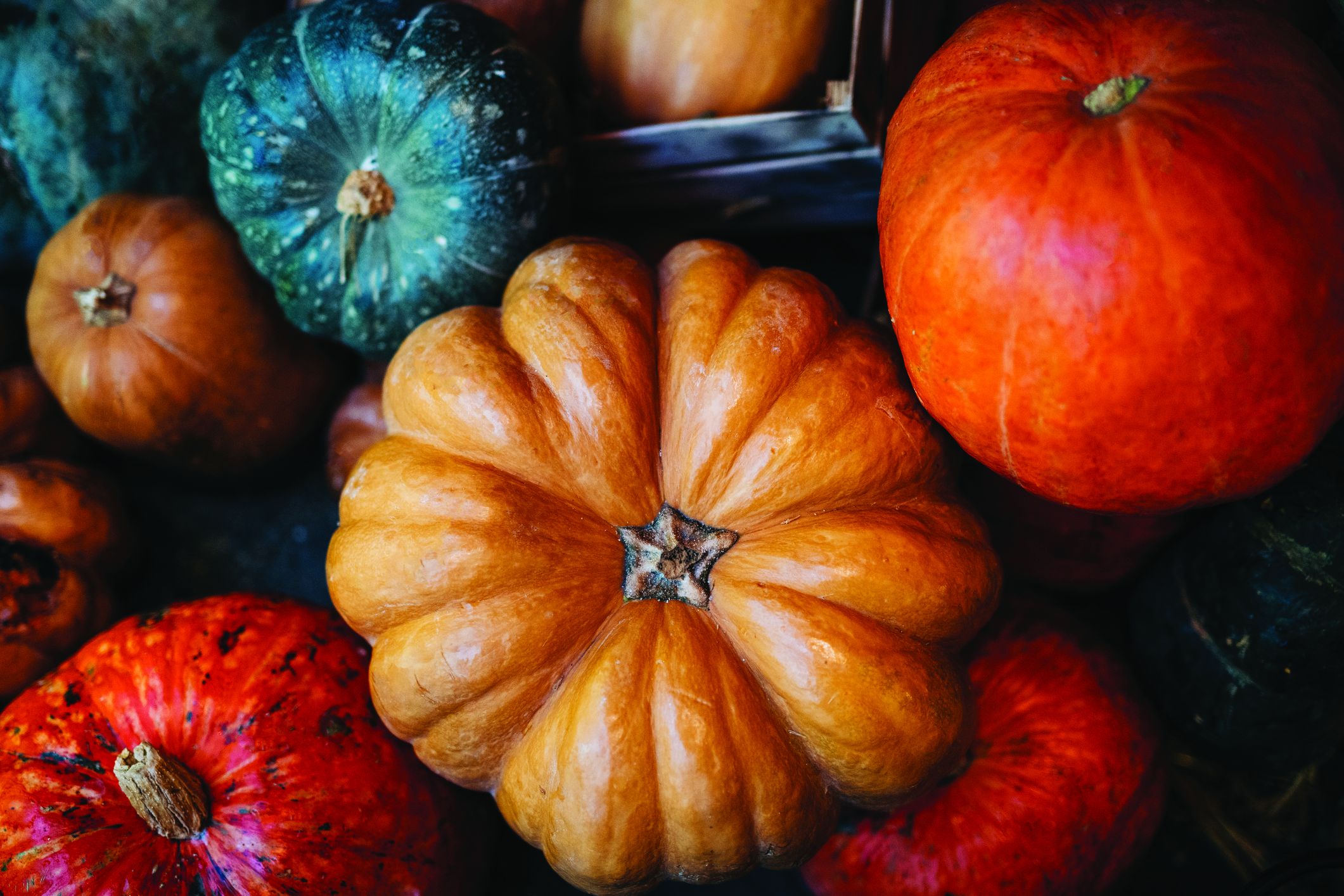
Pumpkins aren’t just for making Jack-o’-lanterns or baking into pies for Thanksgiving. Pumpkins come in many sizes (from very large to tiny) and a myriad of shapes, colors, textures, and flavors. Beyond the familiar orange carving pumpkin, there is a cornucopia of these winter squash to explore. Some are better as seasonal décor or for carving, but many are great for cooking.
A Great Variety. Pumpkins are part of the Cucurbita family of plants that also includes gourds, watermelons, honeydew melons, and cucumbers. Hidden behind rinds of red, orange, yellow, white, green, blue, and striped is a flesh—from sunny yellow to deep orange—rich in fiber and an excellent source of vitamin A and potassium. Note that the nutrients in pumpkin are also found in other winter squash varieties like acorn, butternut, and delicata, as well as other yellow and orange vegetables like carrots and sweet potatoes.
Cooking with Pumpkin. Pumpkin, canned and fresh, can be puréed into soups, roasted, stuffed, or baked into Thanksgiving pie, pumpkin bread, and other treats. Varieties of this gourd are used in cooking around the world. Indian and Caribbean curries, Russian pancakes, Thai custard, African tagine and stews with peanuts and ginger, and Italian risottos and stuffed pastas are just a few examples. Pumpkin and other winter squash varieties, such as butternut, acorn, and kabocha, may be used interchangeably in many recipes.
➧ Choose Wisely. Orange carving pumpkins are not great for cooking. Check your local market for culinary varieties (or use butternut squash).
➧ Speed Prep. Cutting the seeded pumpkin into chunks and microwaving or steaming makes the skins easier to remove. (Smaller varieties have thinner, edible skins.)
➧ Save the Seeds. Roast pumpkin seeds for a healthy snack.
➧ Think Global. Let international cuisines inspire your next pumpkin recipe.
Canned pumpkin is an excellent option for recipes that call for pumpkin purée. It can also be used to stir some pumpkin flavor and nutrients into oatmeal, yogurt, and smoothies, or to mix into pancake, muffin, and quick-bread batters. Canned purée does not come from the popular orange pumpkins used for carving, but rather from Dickinson pumpkins (or Dickinson squash). This tan skinned squash has a sweeter flavor and denser flesh that is better suited for puréeing and baking than the common orange carving or field pumpkin.
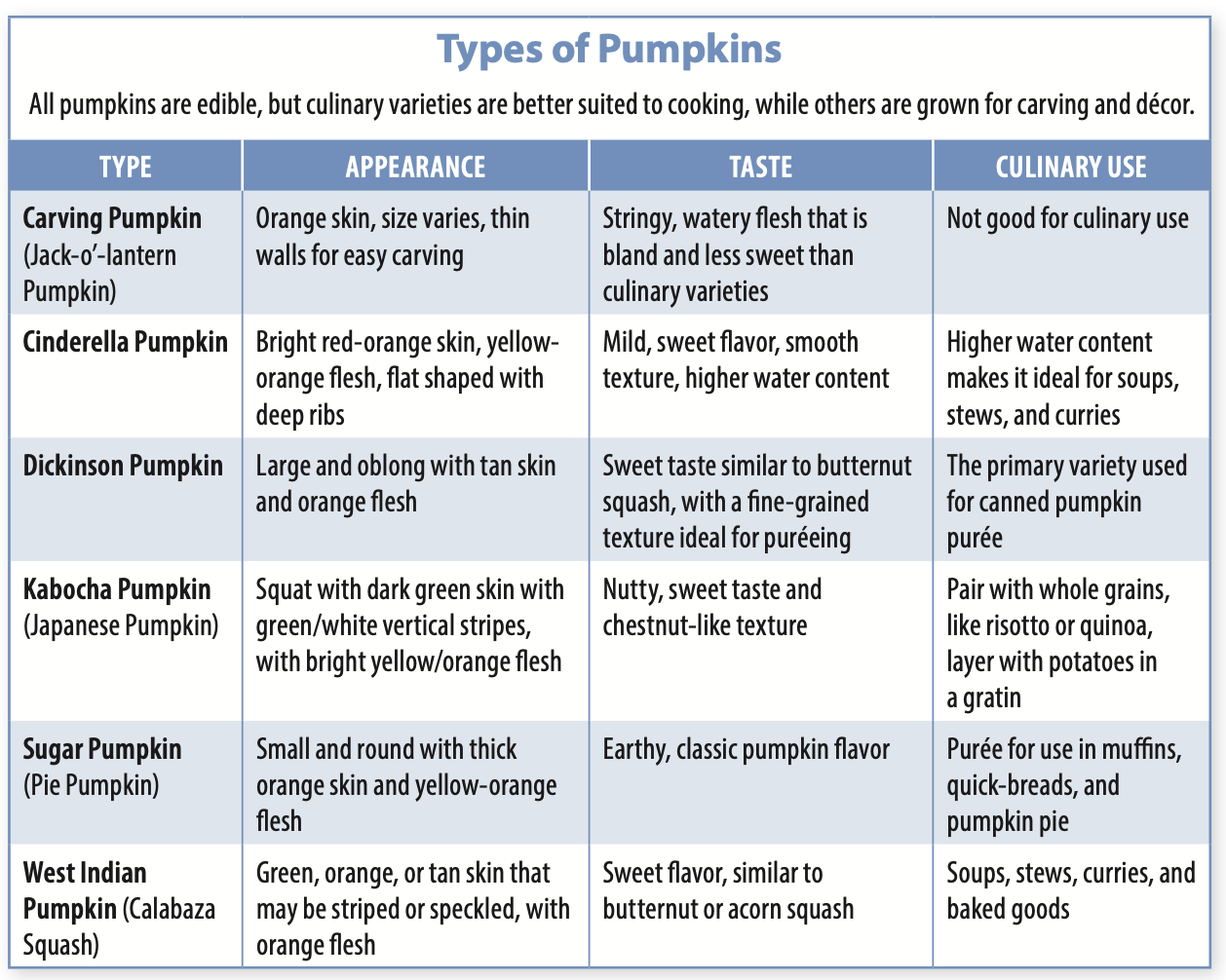
If you are starting with fresh pumpkin, make sure you choose a pumpkin appropriate for cooking (see “Types of Pumpkins” for more information). After washing the surface, cut the pumpkin in half and scrape out the seeds and strings (you can roast the seeds to make a tasty and nutritious snack!). Cut into chunks and steam or microwave until fork tender. Separate the flesh from the skin and cut or mash to use fresh or freeze for up to a year.
Whether you are making an old favorite or trying something new, we hope you enjoy this healthy, seasonal food.