














What to Know About Heavy Metals in Food

Trace amounts of heavy metals can show up in everyday foods—but with a balanced, varied dietary pattern, there’s little reason for worry.

0

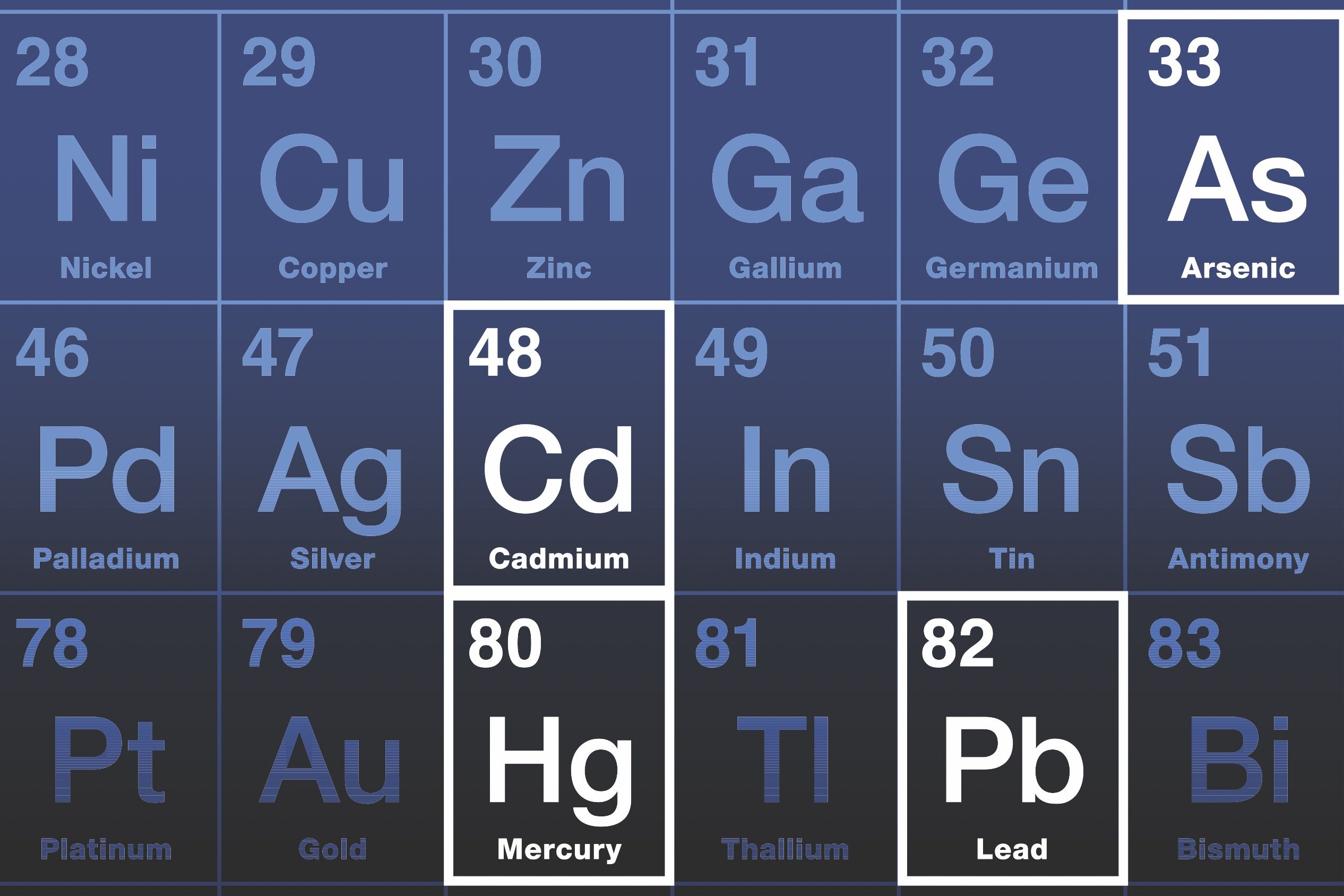
Even healthy foods can contain trace amounts of elements such as lead, mercury, cadmium, and arsenic. These “heavy metals” are part of the earth’s crust and can enter the food supply naturally through soil and water. Industrial activities—like mining, burning fossil fuels, and the manufacturing of batteries, paints, and fertilizers—can add more of these elements to the environment. From there, they may end up in crops and livestock.

How Concerned Should You Be? High levels of exposure to heavy metals—such as from contaminated water or in the workplace—can be toxic, leading to a variety of adverse health outcomes. But the trace levels typically present in foods are far below what’s known to cause harm.

TAKE CHARGE!
Try these simple steps to reduce your exposure to heavy metals in foods:
➧ Go for variety. Eat different kinds of grains, proteins, fruits, and veggies—and vary brands for variety.
➧ Select smart seafood. Choose smaller fish, like salmon, sardines, pollock, or tilapia, which have lower mercury levels than larger, top-of-the-food-chain fish and shrimp.
➧ Eat your minerals. Get enough calcium, iron, zinc, and selenium from foods like low-fat and fat free dairy, lean animal proteins, nuts, seeds, whole grains, beans, lentils, and vegetables to reduce heavy metal absorption.
➧ Mind your water and paint. If your plumbing is old, test and filter your tap. Test paint in houses build before 1978.
That said, chronic, repeated exposure to contaminated food, particularly in children and pregnant women, can be a cause for concern. Babies and young children are exposed to more heavy metals because they eat more food per pound of body weight than adults. Their developing brains are especially vulnerable, and they often eat the same foods day after day.

That’s why regulators are paying close attention. The U.S. Food and Drug Administration (FDA) continuously monitors the food supply and sets strict safety limits. The FDA’s “Closer to Zero” initiative focuses on reducing metals in foods for babies and toddlers, where even small improvements can make a difference over time.

Still, it’s important to keep perspective. Rice commonly contains low levels of arsenic, but populations in countries that eat a lot of rice tend to have some of the longest life expectancies in the world. That tells us that, within a balanced dietary pattern rich in fish and vegetables, these trace amounts are not dangerous.

Nutrition for Protection. A healthy dietary pattern actually helps your body block and remove heavy metals. Essential minerals like calcium, iron, zinc, and selenium compete with heavy metals for absorption. A dietary pattern rich in these nutrients makes it harder for the harmful elements to get absorbed into your body.

Minimizing Exposure. You don’t need to avoid any food groups or favorite meals. Focusing on variety and balance is the best way to reduce exposure while keeping your plate full of nutritious choices.
➧ Mix it up. Eat a variety of grains, proteins, fruits, and vegetables—and even vary the brands you buy. Relying too heavily on one food type, source, or growing location can risk repeated exposure to an element that happens to be particularly high in that food or region.
➧ Choose safer seafood. Fish is one of the healthiest foods you can eat. Opt for smaller fish, which are lower on the food chain, such as salmon, canned light and skipjack tuna, sardines, pollock, or tilapia. Shellfish like scallops, clams, crab, and shrimp are good choices as well. Limit large predatory fish, like swordfish, orange roughy, and king mackerel.
➧ Cook rice smartly. Cook rice with extra water (like pasta) that you drain off. This simple step can reduce arsenic levels (but it also lowers nutritional value). Try other grains like oats, quinoa, bulgur, or barley for variety.
➧ Check your home. If you have older pipes, test your tap water for lead and consider a certified filter if needed. Paint in houses built before 1978 should be tested for lead. (Test kits can be purchased at home improvement stores and may be available for free through local health departments 
and/or water utilities.)
➧ Refer to trusted sources. The U.S. Food and Drug Administration and Environmental Protection Agency are tasked with helping to ensure your food and water meet safety standards. If unusually high levels of any heavy metals are discovered in a particular food, the media will be alerted, and recalls will be put in place.

Heavy metals are part of our environment, and small amounts do make their way into foods. But research shows that the benefits of a varied, nutrient-rich diet far outweigh the minimal risks from trace exposure.

LEAVE A REPLY

Logged in as JHancock Member. Log out?

Please enter your comment!