
























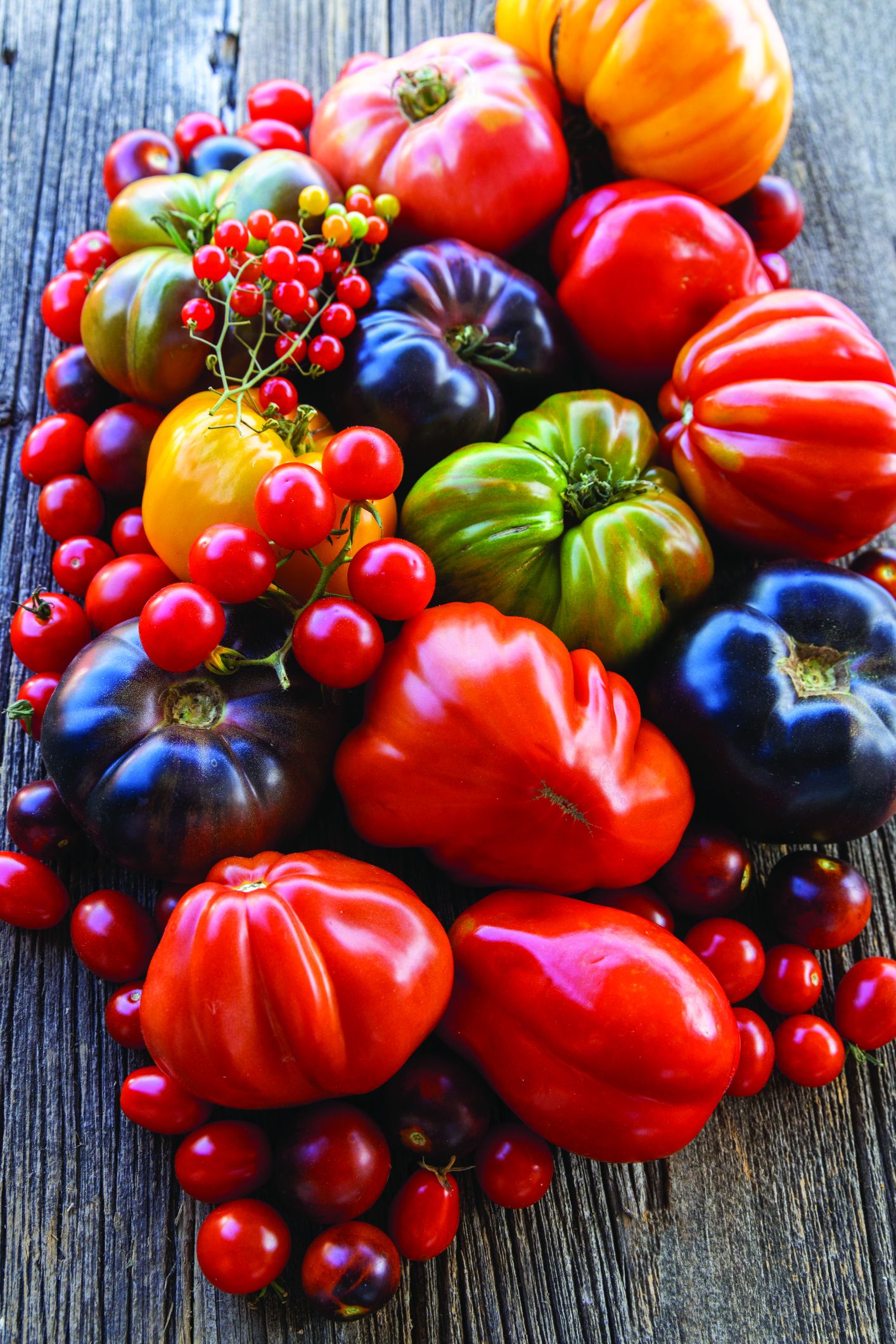
While they’re available all year long, prime tomato season is from July through September. There are more than a thousand tomato varieties in a rainbow of colors and a wide range of shapes and sizes.
Tomato 101. Though we eat tomatoes as a vegetable, they are, botanically, a berry! Native to South America, tomatoes were first cultivated in Mexico by the Aztecs, who named them tomatl, which means “the swelling fruit.” This tasty fruit made its way from the Americas to every corner of the world, becoming a staple in many cultures.
Fresh tomatoes are readily available in a multitude of sizes and colors. Canned, they are available whole, diced, crushed, and puréed, with and without spices like basil, oregano, or chopped chili peppers. Prepared pasta sauces and salsas are other great ways to add tomatoes to your meals (just choose those with reduced sodium and low added sugars). Choosing and Storing. In-season and locally grown tomatoes tend to be the most flavorful. If you’re not growing them in your own backyard or container garden, visit the neighborhood farmers market or farm stand if available. When buying at the grocery store, look for tomatoes labeled “locally grown.” Ripe tomatoes are fragrant, deeply colored, smooth skinned, and firm, and they give to gentle pressure.
If kept at room temperature, tomatoes continue to ripen after they’re picked from the vine. Keep them at room temperature to maintain the best flavor and texture, turning them stem-side down to help prevent loss of moisture through the stem end. Once fully ripened, tomatoes will keep for about a week at room temperature. If you’re not ready to use them in this time, refrigerate them to slow the aging process.
Bringing refrigerated tomatoes to room temperature before using may improve flavor. Speed the ripening of underripe tomatoes by placing them in a brown paper bag with a ripe banana or apple at room temperature. (Refrigerating underripe tomatoes will stop the ripening process, even when they are brought back to room temperature.)
If you find yourself with an overabundance of tomatoes, you can make sauce and freeze or can it. Overripe or bruised tomatoes can still be useful. As long as they are not rotten, remove bruised, discolored, or soft sections and use the rest to make things like tomato sauce, bruschetta, tomato soup, salsa, frittata, or gazpacho.
The many varieties of tomatoes can vary by region, so definitely look out for those grown where you live and give them a try. Color, freshness, texture and flavor: tomatoes have a profile suited to almost any culinary application.
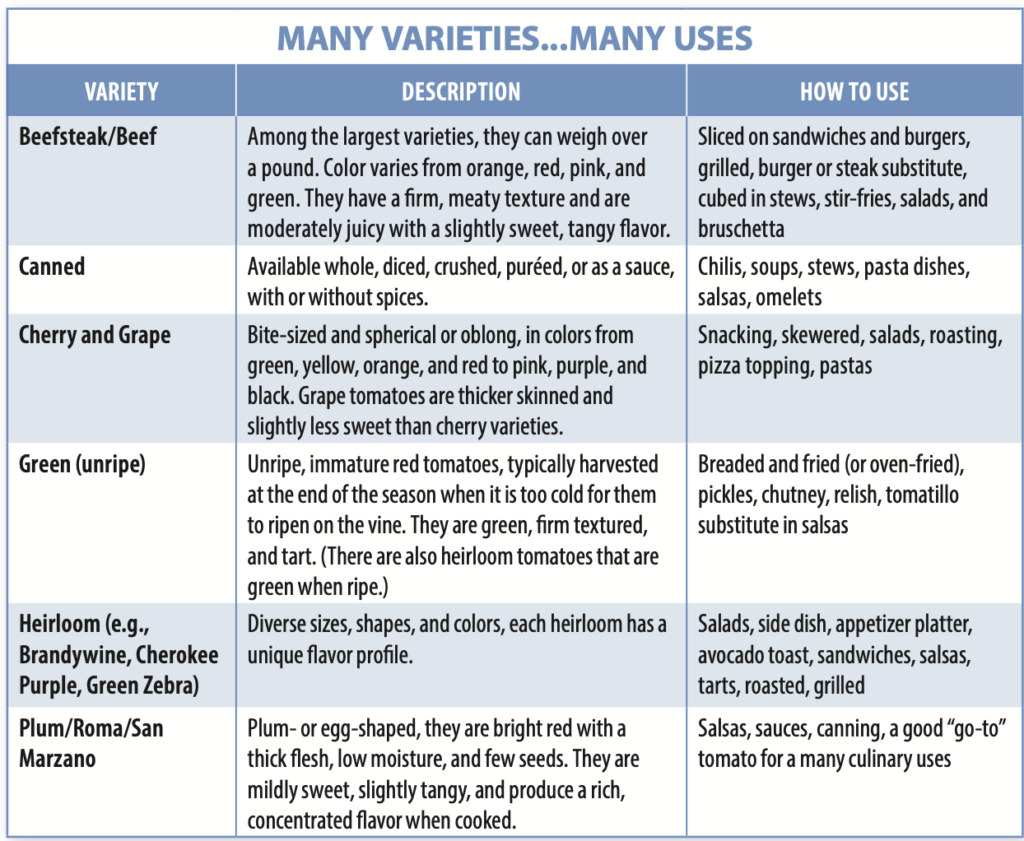
➧ Choose Fresh and Canned. Including either in your weekly meals is an easy and tasty way to enjoy this healthy fruit.
➧ Buy Local. The closer they’re grown, the fresher they are and better they will taste.
➧ Make Them Last. Store fresh tomatoes on the counter. Refrigerate fully ripe tomatoes if you’re not going to use them within a week.
➧ Preserve them. Turn an overabundance of ripe and overly ripe tomatoes into sauce for future use.
➧ Play! Try tomato varieties in ways that best suit their unique characteristics, whether snacking, cooking, skewering, or grilling.