























If you are following—or considering—a “keto” diet for weight loss, it’s important to understand what research has found out about potential risks and benefits.
What is Ketosis? Eating a very low carbohydrate diet for an extended period of time can put your body into a metabolic state called nutritional ketosis. Here’s how it works: To fuel the brain and red blood cells, and for short bursts of energy, our bodies use a sugar called glucose. We get glucose primarily from consuming carbohydrates, and it is stored in our liver and muscles. Long term energy needs rely on fat as fuel—but we need some glucose to burn that fat. During prolonged periods of fasting, physical activity, or very low carbohydrate intake, there might not be enough glucose to fuel the brain, red blood cells, and the complete breakdown of fat. The body will then build glucose from other sources, such as amino acids from dietary protein or our muscles. To avoid too much muscle breakdown, the body can switch to using a group of acidic compounds called ketone bodies (ketones) as an alternative fuel source.
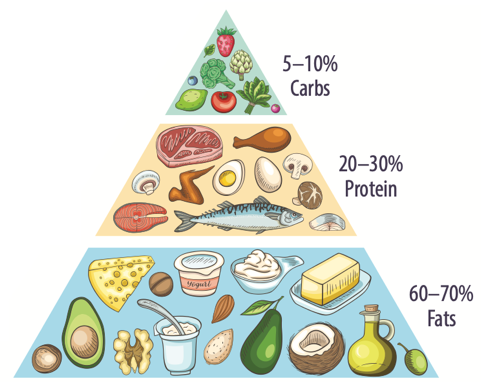
A Ketogenic Diet. A ketogenic diet is high in fat, moderate in protein, and low in carbohydrates. While there are different categories of ketogenic diets, those advertised for weight loss generally recommend getting something like 60 to 70 percent of one’s calories from fats, 20 to 30 percent from proteins, and only five to 10 percent from carbohydrates. (In the standard dietary recommendations for adults, the majority of calories—45 to 65 percent—comes from carbohydrates, with 10 to 35 percent from proteins and only 20 to 35 percent from fats.)
Carbohydrates are found in any food or beverage with grains/flour, sugars, beans, lentils, milk, fruits, and vegetables (especially starchy vegetables like potatoes, peas, and corn). Most Americans eat 200 to 350 grams of carbs a day. On a ketogenic weight loss diet, someone eating 2,000 calories a day would need to reduce carbohydrate intake to 25 to 50 grams a day. Fifty grams of carbohydrate is roughly the amount you’d get from one slice of white bread and a cup of spaghetti, or just one can of soda.
➧ Know the Risks. Ketogenic diets often have side effects and can be dangerous for some people.
➧ Limit Saturated Fats. Try to get most of your dietary fat from plant sources such as oils, nuts, and seeds as well as from fish and poultry, rather than red meats, butter, cream, and cheese.
➧ Seek Help. Working with a doctor or Registered Dietitian can help insure you stay safe and properly nourished.
➧ Consider Other Approaches. A healthy dietary pattern (like a Mediterranean-style diet) is easier to stick to long-term, and can result in similar weight loss and improved health parameters.
The amount of carbohydrate restriction it takes to get an individual’s body into a state of ketosis depends on a number of factors, including body mass index (BMI), body fat percentage, level of physical activity, and basal metabolic rate (the amount of energy your body uses at rest). For this reason (as well as for safety), measuring ketone levels, especially at the start of the diet, is recommended to help you see if you are in a state of ketosis and determine the ideal carb intake levels to keep you there. This can be accomplished at home using either urine ketone strips or a blood ketone meter. The blood test, accomplished by putting a drop of blood from a finger prick onto a test strip and inserting it into a special meter, is generally considered more accurate. A normal ketone level is below 0.6 millimoles per liter (mmol/L). For weight loss, 1.5 to 3 mmol/L is a typical recommendation. A dangerous condition called ketoacidosis occurs above 3 mmol/L (more on that below).
Possible Benefits. Following a ketogenic diet has been shown to result in short term weight loss, although research shows most people gain the weight back. Any diet that results in long term weight loss can help with control of type 2 diabetes and reduce risk for cardiovascular disease.
In a randomized crossover trial of people with type 2 diabetes or prediabetes, a ketogenic diet that incorporated non-starchy vegetables and avoided added sugars and refined grains resulted in similar weight loss and improvement of blood sugar control compared to a weight loss plan based on a Mediterranean-style dietary pattern. The keto plan, compared to the Mediterranean-style plan, resulted in lower triglyceride levels and higher HDL (good) cholesterol levels, however it raised LDL (bad) cholesterol levels. The Mediterranean-style diet was found to be at least as effective with regard to weight loss, more nutritious, and easier to stick to than the ketogenic diet.
Possible Harms. If a lot of it comes from meat and cheese, the high percentage of calories from fat required by a ketogenic diet can lead to high intake of saturated fat, which causes LDL cholesterol levels to increase. High LDL cholesterol levels are associated with increased risk of heart disease.
As the body transitions to running on ketones, many people report short-term adverse effects known as the “keto flu.” Symptoms can include nausea, vomiting, headache, fatigue, dizziness, insomnia, constipation, and increased fatigue during physical activity. Bad breath (“keto breath”) has also been reported.
Since ketones are acids, they make the blood more acidic. The moderate levels of ketones achieved in nutritional ketosis are generally safe, but people with diabetes that is not well controlled and dieters who avoid nearly all carbohydrates can develop ketoacidosis, a potentially deadly condition marked by dangerously high levels of ketones in the blood.
Additionally, because they greatly restrict or rule out plant foods like whole grains, beans, lentils, and most fruits and vegetables, ketogenic diet plans can lead to inadequate intake of essential vitamins, minerals, and phytochemicals, and the low fiber intake can lead to constipation, and, potentially, negative changes to the gut microbiome. High-fat, low-carbohydrate diets like ketogenic diets can increase risk of developing kidney stones and fatty liver disease. Research shows ketogenic diets are associated with higher risk for emergency room visits and hospital admissions for dehydration, electrolyte disturbances, and hypoglycemia (low blood sugar).
Talk to your healthcare provider before starting a ketogenic diet. People who have experienced pancreatitis, or have liver failure, disorders of fat metabolism, and certain rare genetic conditions should avoid these diets. People with diabetes taking insulin or oral hypoglycemic agents (including metformin and sulfonylureas) will need their medications adjusted to lower the risk of severe hypoglycemia (low blood sugar). It is not safe for pregnant women to follow a ketogenic diet. Occasionally, people following a ketogenic diet may experience a false positive on a breath alcohol test.
This type of diet plan is challenging to follow, has numerous reported side-effects, and excludes or limits food groups important to health and adequate nutrient intake (including fruits, most vegetables, whole grains, and legumes).
Reducing calorie intake while following a more balanced dietary pattern (such as a Mediterranean-style diet or the Healthy U.S.-Style dietary pattern) is safer, easier to maintain, and more nutritious. If you do choose to follow a ketogenic diet for weight loss, it is recommended you work closely with a healthcare provider.