


















Fermentation has been used worldwide for thousands of years. It preserves foods—preventing the growth of bacteria that lead to spoilage or illness—and also changes the taste, texture, and, in some cases, the health impact of the food.
Fermentation. Fermentation results from the breakdown of sugar or other carbohydrates by yeast or bacteria, creating acids, gases, and/or alcohol. Everything from fruits, vegetables, beans, and grains to meats and seafood can be fermented. Researchers have been studying how the end-products of these reactions, along with the live microbes themselves, behave in the human body, and what impact they may have on health.
Health Impacts. Some changes related to fermentation can impact health. For example, some plant foods contain compounds that decrease the amount of certain nutrients (usually minerals) available for absorption into the body. Changes brought about by fermentation can free up more nutrients for absorption.
Some fermented foods contain live microbes classified as probiotics, which confer health benefits when consumed in adequate quantities. Probiotics may be microbes used in the fermentation process or added later. They are destroyed by heat and some processing methods, so fermented foods which are baked or pasteurized, like bread or pasteurized kombuchas, do not contain probiotics. Some postbiotics—inactivated microorganisms and/or compounds created during the fermentation process— have health benefits as well.
When milk is fermented into yogurt, kefir, or cheeses like cheddar, parmesan, gouda, and Swiss, some or all of the lactose (a natural milk sugar) is broken down in the fermentation process. People who are lactose intolerant may be able to tolerate fermented milk products without discomfort.
Alcohol is an end product of fermentation associated with negative health consequences, especially at high intake levels. Additionally, some fermented foods, like sauerkraut, kimchi, fermented pickles, and soy sauce, contain high levels of sodium, which can increase blood pressure and, therefore, risk of stroke.
How to Choose. For the greatest health benefits, look for fermented foods labeled “fermented,” “cultured,” or “live active cultures.” They will likely be refrigerated to extend the shelf life of the live organisms.
Fermented dairy products will list live bacteria, such as lactobacillus, while foods like kimchi or sauerkraut, which are made with wild microbes, may not. Check sodium content on labels of salty fermented foods and limit portion sizes to make sure you’re not getting too much sodium.
➧ Feed your gut. Eating fermented foods may help support diversity in the gut microbiome, which is good for health.
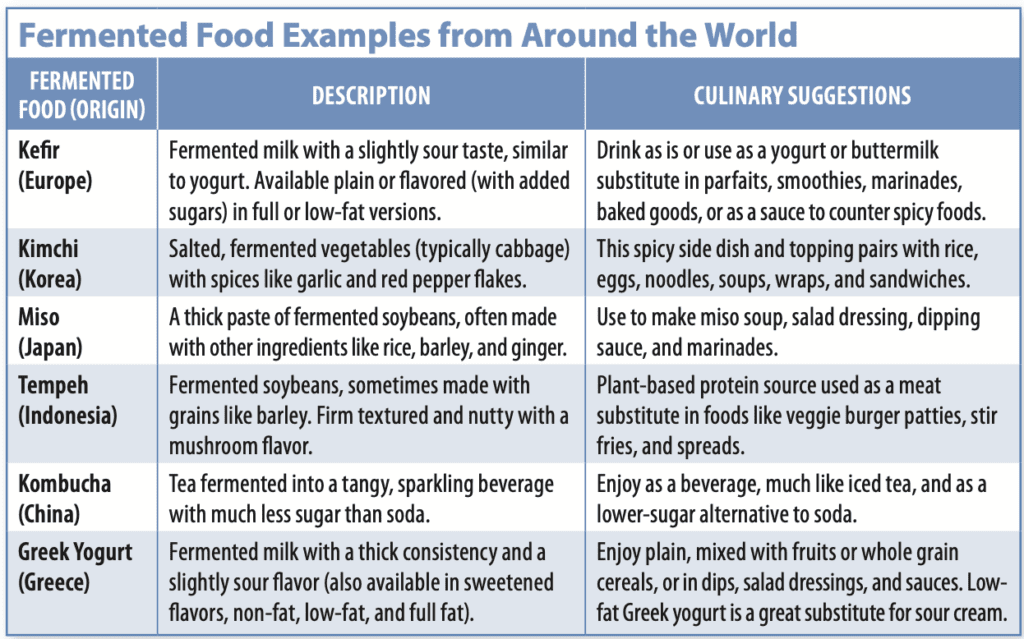
➧ Explore! Dairy, veggies, grains, and legumes are fermented into a variety of foods from familiar sourdough bread to tempeh, a plant protein made from soybeans (see recipe on page 7).
➧ Look closely. Check labels for words like “cultured,” “fermented,” or “contains live active cultures.”
➧ Enjoy. Incorporate healthy fermented foods for flavor, variety, and health.
➧ Watch the sodium. Pickled foods (including sauerkraut) are high in sodium, so keep portions small.
Try small servings of fermented veggies, like kimchi or refrigerated pickles, to add zip to sandwiches, roasted vegetables, or any meal; mix miso into salad dressings, marinades, and dips for an umami experience; and sip on tangy kefir or bubbly kombucha to change up your beverage routine.