


















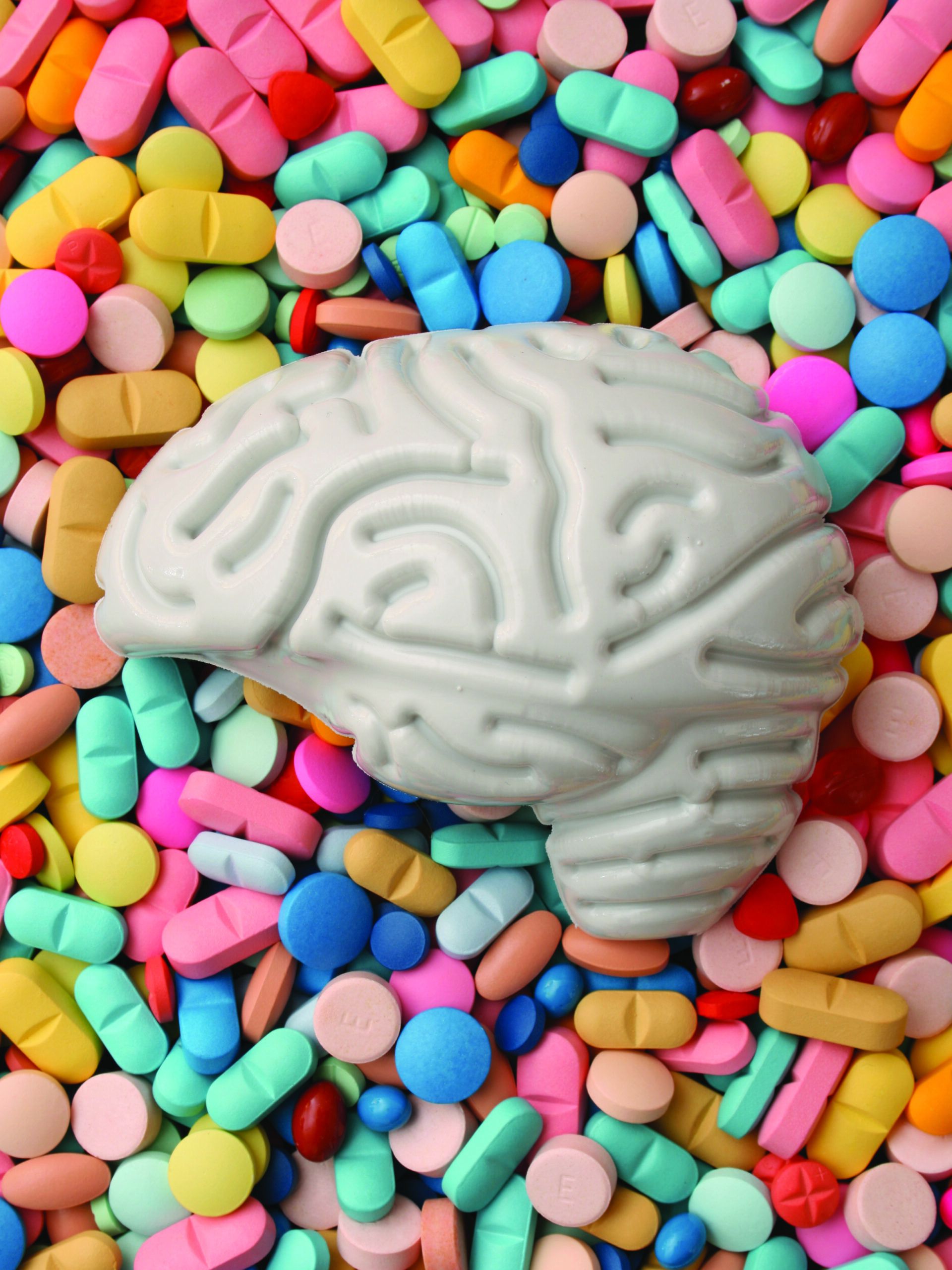
About 25 percent of adults over 50 take a supplement that promises to improve cognition or cognitive health. As long as these products don’t say they improve or treat diseases like Alzheimer’s or other dementias, they are allowed to make any claims they want—without having to prove they work. So, which marketing claims should you believe?
Behind the Claims. A healthy dietary pattern is associated with lower risk of cognitive decline. This leads to the question of whether supplements of the vitamins, minerals, phytochemicals, or omega-3 fatty acids found in the foods that make up such a dietary pattern could be helpful.
Some compounds not found in food, like the jellyfish protein apoaequorin and the plant extracts Ginkgo biloba and ashwagandha, have also been theorized to support brain health. Do they really?
➧ Don’t be fooled. Supplement marketers can legally make claims about their products without proof (except to say they cure or prevent a specific disease).
➧ Know the facts. There are currently no proven or recommended supplements for boosting brain health or cognition.
➧ Tell your doctor. Any supplement can have unwanted side effects and interactions. Make sure your healthcare provider knows about everything you take, no matter how innocuous it seems.
➧ Omega-3s. Omega-3 polyunsaturated fatty acids are an important part of cell membranes. There is a high concentration in the brain. The body cannot manufacture omega-3s, so we must get them from food. The best source, by far, is fish.
Dietary patterns higher in fish are associated with lower risk of cognitive decline. Unfortunately, the same association has not been consistently found in people taking omega-3 supplements. People who habitually consume fish-rich diets may have other behaviors that contribute to the association (including the fact that they are eating less red meats).
➧ Ginkgo Biloba. Extracted from the leaves of the ginkgo tree, Ginkgo biloba is heavily marketed as a memory enhancer. While results of studies have been mixed, one high quality study stands out. The Ginkgo Evaluation of Memory (GEM) study gave roughly 1500 participants ages 72 to 96 years 120 milligram Ginkgo biloba supplements twice a day. Another similar group received a placebo. Compared with the placebo, the Ginkgo biloba supplement did not result in less cognitive decline in older adults with normal cognition or with mild cognitive impairment.
➧ Vitamins. “There are many vitamins marketed to improve brain health,” says Kyla Shea, PhD, a scientist at the Human Nutrition Research Center on Aging who studies the role of micronutrients in age-related disease and disability, “but most of the scientific evidence is derived from observational studies, which only provide associations. In order to determine whether vitamin supplements do indeed improve cognitive performance, well-designed randomized controlled trials are needed. Unfortunately, right now such studies are lacking.”
➧ Apoaequorin. Derived from jellyfish and produced in labs using modified E. coli bacteria, this protein is broken down in the digestive system. This means it does not enter the body, much less cross the blood-brain barrier, so oral supplements are likely to be useless. That has not stopped the manufacturer of the popular supplement Prevagen® (which contains apoaequorin and vitamin D) from claiming their product improves memory. There has been very little clinical research on apoaequorin, other than that conducted by the manufacturer.
➧ Ashwaganda. There are claims that leaves and roots of the Ashwagandha plant boost memory. Over the years, some studies (including animal studies and a few small randomized controlled trials) have suggested this herbal supplement has potential, but the evidence to date is inadequate to consider using it to improve memory.
Even “natural” compounds can have unwanted side effects or adverse interactions with prescription medications. If you want to try any of these or other compounds claiming to boost thinking, focus, or memory or prevent, slow, or reverse cognitive decline, check with a healthcare provider first. And be aware that none are backed by solid evidence, nor are any recommended by authoritative bodies.
A healthy dietary pattern combined
with regular physical activity, good sleep, avoidance of tobacco smoke, ongoing learning, and socializing are the best tools we have to protect brain health.
Image © FotografiaBasica | Getty Images
The market is teeming with supplements promising to boost memory or protect brain health.