





















We can’t digest fiber, but it plays a lot of important roles as it passes through the body. Here’s what you need to know:
1. Fiber is Good for You. Dietary patterns high in naturally fiber-rich foods are associated with lower risk of heart disease, type 2 diabetes, diverticular disease, and constipation. This is in part because fiber slows the rate at which sugars enter the bloodstream, interferes with the absorption of dietary cholesterol, and helps waste move through the intestines more quickly. Fiber helps us feel satisfied, so we may consume fewer calories. It also provides energy for gut microbes, which feed on these undigested carbohydrates and produce byproducts that are beneficial to our health. Additionally, consuming high levels of dietary fiber has been associated with lower risk of some cancers, and preliminary research has found a positive association between fiber intake and lower risk of depression and dementia.
2. Most Americans Don’t Get Enough. According to the 2020-2025 Dietary Guidelines for Americans, dietary fiber is a “nutrient of public health concern,” meaning we don’t get enough to support optimal health. In fact, on average, American adults consume less than half the recommended amount of dietary fiber. While fiber needs are tied to calorie needs, most sources suggest aiming for between 25 and 30 grams a day. (In general, due to differences in size and caloric needs, most women should aim for the lower end of this range, and men for the higher end.) An alternate way to calculate fiber needs is 14 grams for every 1,000 calories you eat.
3. There are Different Kinds of Fiber. Fibers have different effects in the body based on three basic properties—solubility, viscosity, and fermentability. For example, both soluble fibers like those in oats and insoluble fibers like wheat bran are good for regularity (although through different mechanisms), but only viscous soluble fibers help lower LDL-cholesterol levels. Fermentable fibers nourish gut bacteria, but non-fermentable fibers do not. A food that contains fiber almost always has multiple kinds, so if you eat a variety of fiber-rich foods you will get a good mix of different types of fibers to support all your health needs!
Nutrition Facts labels on packaged foods are required to list the grams of dietary fiber and the percent daily value in one “serving” of that food (as defined at the top of the label). Note that the percent daily value is based on the 28 grams of fiber recommended for a 2,000-calorie diet. Manufacturers may list soluble and insoluble fiber separately if they wish, but even foods without this breakdown almost always have both.
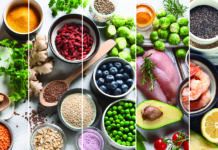
4. Natural Sources are Best. We get fiber from plant foods. Not only do you get a variety of types of fiber when you eat these naturally fiber-rich foods, but you also get a variety of other important nutrients. Whole grains, vegetables, fruits, beans, lentils, and nuts and seeds are good sources of fiber—and are also rich in vitamins, minerals, and phytochemicals. Nuts, seeds, some vegetables (think avocados), and, to a lesser degree, whole grains, are sources of healthy fats. Beans and lentils are a great fiber-rich alternative to less-healthful red meats for getting protein.
➧ Know Your Goal. Aim for 25 to 30 grams of dietary fiber a day.
➧ Go Natural. If you eat plenty of vegetables, fruits, whole grains, beans and lentils, and nuts and seeds, you are likely to meet your fiber needs— no counting necessary.
➧ Check Nutrition Facts Labels. Nutrition Facts labels on packaged foods list grams of Dietary Fiber per serving.
➧ Check Ingredients List. Make sure the ingredients list contains naturally fiber-rich foods.
➧ Be Aware of Added. Some or all of the fibers in processed foods may be added. These fibers may not have the same health benefits as intrinsic fibers in whole foods.
➧ Get the Whole Picture. High fiber foods that are also high in refined grains, added sugars, and sodium are not wise choices.
5. Added Fibers are Common. Some fibers are added to meet health-conscious consumers’ desire for high fiber foods, but others are added as thickening agents or stabilizers, or for other processing-related purposes. Not all added fibers have the same physiological health benefits as fibers found naturally in plant foods (and they don’t inherently come with other nutrients). The Dietary Fiber listed on the Nutrition Facts label includes grams of natural fiber, as well as added fibers (isolated or synthetic) that the U.S. Food and Drug Administration has determined have beneficial effects in the body. If you want to know what you are getting, you will need to check the ingredients list. The names of plant foods indicate natural fibers. There are many names for added fibers, but a good starting place is to look for ingredients that include the words fiber or gum and names like beta-glucan, psyllium, cellulose, pectin, and inulin. Don’t choose processed foods on the basis of fiber content alone; also consider the content of refined carbohydrates, added sugars, and sodium.