




















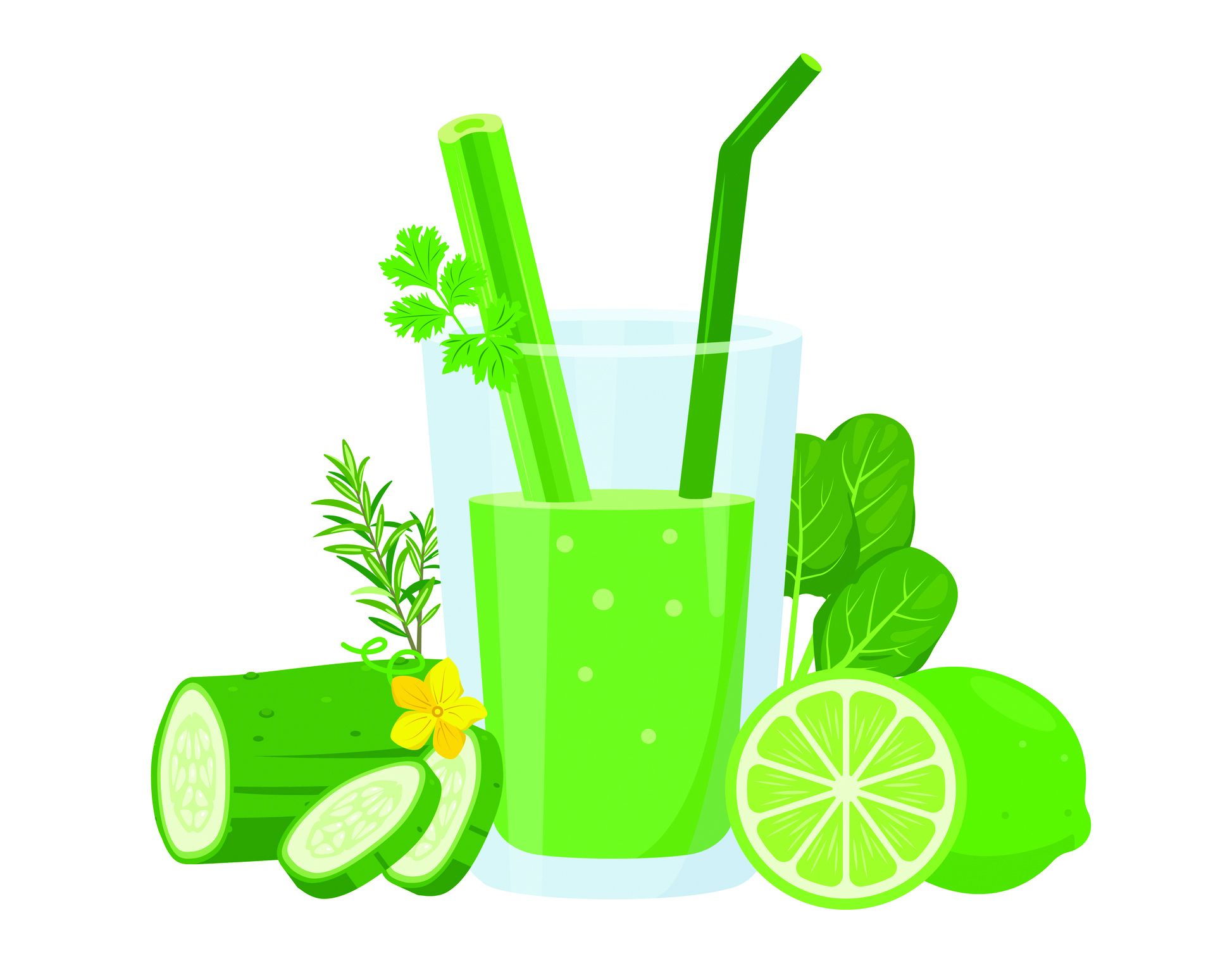
One of the latest so-called superfoods is “green juice,” made by juicing veggies like leafy greens and celery. Let’s dig into the health claims being made about this bright green beverage:
➧ It increases nutrient intake. If you don’t normally eat many fruits and vegetables, drinking juiced greens will likely give you some of the nutrients you are missing. But it’s no substitute for a variety of the real thing. If you stick with mostly green veggies, you’re not getting the nutrients that come along with other colors. Plus, juice is missing the fiber you’d get from eating whole plant foods (see page 3 to find out why fiber is so important to your health). And you may be upping your calorie intake as well. “We can drink calories faster than we eat them,” says Alice H. Lichtenstein, DSc, Stanley N. Gershoff Professor of Nutrition and editor-in-chief of Tufts Health & Nutrition Letter. “Could you eat all the veggies that go into the juice in one sitting?”
➧ It hydrates your cells. Having enough water in your cells is critical to their function. Our cells get water from the fluids we drink. But you don’t need a special drink to hydrate your cells. Any fluid will keep you hydrated. Water is best (unless you are dehydrated from excessive sweating, diarrhea, vomiting, or blood loss, in which case water with electrolytes is a good choice). The same can be said for the claim that green juice improves skin health: staying hydrated is good for your skin. Stick with water or other unsweetened non-alcoholic beverages for healthy hydration.
➧ It contains enzymes that improve digestion. Your body has special enzymes that help break down the foods you eat. All raw vegetables contain these enzymes as well (in varying degrees). There is no real evidence that eating even the most enzyme-rich plant foods (such as pineapple) improves your digestion. “It is unlikely any of the enzymes remain functional after mixing with stomach acid,” says Lichtenstein. Unless you have been diagnosed with an enzyme deficiency, rest assured your body makes all the enzymes it needs to break down the digestible food you eat.
➧ It reduces systemic inflammation and strengthens your immune system: This claim for juiced greens seems to stem, in large part, from the fact that green plants contain a compound called chlorophyll, which the plant uses to convert sunshine to energy. Chlorophyll has been studied for its ability to reduce oxidative stress and protect cell DNA from damage, but these studies were carried out in test tubes, not in humans. Chlorophyll is broken down in digestion, although the latest research shows that its derivatives are absorbed (at least to some degree, and at least in animals like trout and rats). As of now, there is no strong data in humans, which means there is no strong scientific evidence supporting the health benefits attributed to chlorophyll. “Keep in mind, you’re not getting any chlorophyll or other phytochemicals from juice over and above what you would get from eating the intact vegetables,” says Lichtenstein.
➧ Improve gut health. One of the best things you can do for your gut health is eat foods with natural fibers, and green juice has little to none. “Juicing removes most of the fiber (and its well-established health benefits),” says Jeffrey Blumberg, PhD, a research professor in the Friedman School of Nutrition Science and Policy. “Blended smoothies retain much of the fiber, but the whole foods are best.”
What to Do. Some spinach in your morning eggs; a green salad with lunch; kale, broccoli, or another green veggie in place of some starch with dinner: making greens a part of your day is the healthiest choice. Drinking an occasional juiced fruit-and-veggie beverage is fine, but it’s not a magical “superfood” and cannot compensate for overall poor dietary intake.
Mixing it up is also the safest option. “It is worth noting that some green veggies—like spinach, beet greens, Swiss chard, rhubarb leaves, and collard greens—are high in oxalates,” says Blumberg, “which are associated with an increased risk of kidney stones.” Aim for a variety of colorful veggies (and fruits) to ensure you are getting the nutrients and fiber your body needs to function its best.
➧ Be Wary. Most of the claims for this so-called “superfood” are not backed by science.
➧ Eat Healthy. No matter how nutritious it is, no single food (or beverage) can make up for a poor-quality diet.
➧ Go for Fiber. Fiber is important to your health. Whole veggies have it. Juice does not.
➧ Mix it Up. Eating a variety of colorful fruits and vegetables ensures you get a wide range of vitamins, minerals, and phytochemicals. Don’t stick to one color all the time.